Professional Services Lead Generation: A B2B SaaS Marketer's Guide to High-ROI Webinars
Learn proven professional services lead generation tactics to turn webinars into high-converting leads. A practical playbook for repurposing content at scale.
Old-school professional services lead generation—think cold outreach and waiting for the phone to ring—is inefficient and outdated. The modern B2B playbook is about demonstrating expertise upfront and generating demand through high-value content. For B2B marketers facing limited resources and pressure to deliver consistent, qualified leads, webinars are no longer just an option; they are the central engine of a scalable, high-ROI strategy.
Why Traditional Lead Generation Is Failing Professional Services
Let's be blunt: the old 'first contact' model for lead generation is broken. For firms in legal, finance, and consulting, where trust and expertise are the core product, the traditional sales funnel has been completely flipped.
Today’s B2B buyers are empowered, well-researched, and have zero patience for an unsolicited sales pitch. They conduct extensive independent research, shortlisting potential partners long before they ever agree to a call. This self-serve journey is the new reality for demand generation.
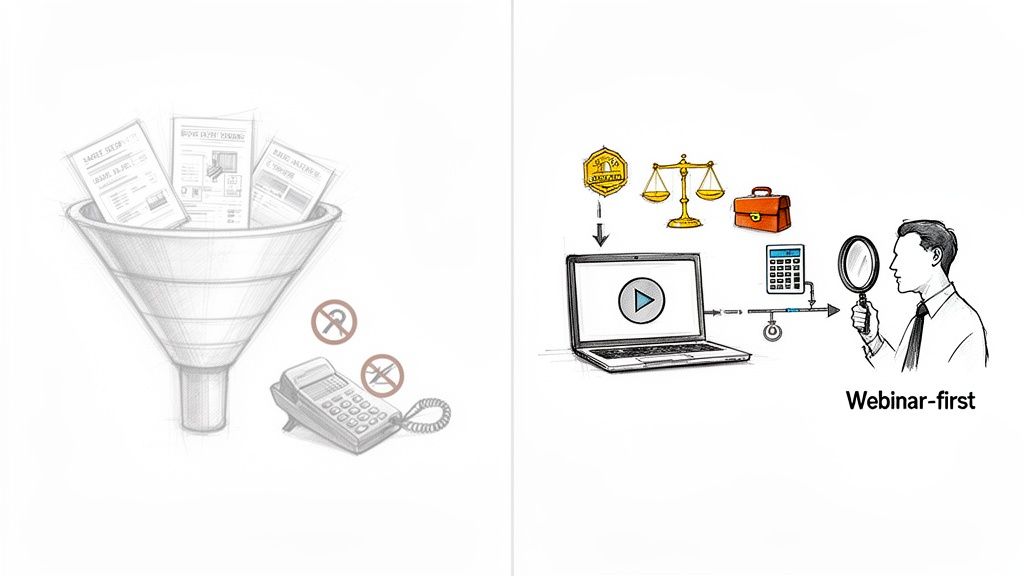
This shift presents a massive challenge. Data shows that decision-makers complete up to 70% of their purchasing journey before contacting any vendor. More critically, a staggering 81% have already chosen a preferred supplier by that first conversation.
The takeaway is simple: if you are not a visible, valuable resource during their initial research, you are not even in the running. You can read more about the shifting B2B buyer journey in our dedicated article.
The Rise of Expertise-Led Marketing
To win, your firm must shift from reactive selling to proactive demand generation. The objective is to become the go-to authority that prospects discover during their critical, self-directed research phase. This is where the core strategy of this guide clicks into place: using webinars as a central production engine to capture, engage, and nurture high-value leads.
A webinar-first approach directly solves the most pressing pain points for modern B2B marketing and content teams:
- Limited Resources: It enables the creation of one cornerstone piece of content that can be efficiently repurposed into dozens of smaller assets, maximising the ROI of your initial effort.
- Need for Consistent Content Output: A single, high-quality webinar can fuel your content calendar for an entire quarter, ensuring a steady stream of thought leadership across multiple channels.
- Proving ROI: Webinars produce tangible engagement metrics and, most importantly, Marketing Qualified Leads (MQLs). This makes it far easier to demonstrate marketing’s direct contribution to pipeline and revenue.
This isn't just about getting more leads; it's about generating the right ones at scale. By delivering genuine value, you position your firm as a strategic partner, ensuring you are top-of-mind when prospects are finally ready to engage.
By building your lead generation strategy around educational, high-value content, you meet potential clients where they are—deep in their research. You build a foundation of trust that is essential for any long-term partnership. It is a fundamental shift from hunting for clients to attracting them with undeniable expertise.
Building Webinars That Actually Generate Leads
Anyone can host a webinar. Very few can architect one that consistently fuels their professional services lead generation pipeline.
The difference isn't logistics; it's architecting a high-conversion experience from the ground up. This process begins with a simple, powerful question: what urgent, specific problem can we solve for our ideal client right now?
The answer is never a sales pitch. For a legal or financial firm, it could be a detailed breakdown of new regulatory changes. For a consultancy, it might be a deep-dive into a landmark case study, offering a repeatable framework for success. The goal is to deliver such undeniable value that your experts become indispensable advisors in the minds of your audience.
This value-first mindset is the bedrock of any webinar programme that delivers tangible ROI. Once you land on a compelling topic, the next implementation step is to structure the content for maximum engagement and lead capture.
Architecting a High-Conversion Webinar
The format you choose has a massive impact on audience engagement. While a single-speaker presentation can work, dynamic formats often perform better for professional services audiences who value diverse perspectives.
Consider these high-engagement virtual event formats:
- The Expert Panel Discussion: Assemble two or three subject matter experts (internal or external) to discuss a timely issue. This dynamic feels less like a lecture and consistently sparks a richer Q&A session. Practical Example: A financial advisory firm could host a panel on "Navigating Q4 Tax Changes for SaaS" with an in-house expert, a guest CFO, and a client success manager.
- The Client Case Study Breakdown: Walk attendees through a real-world success story. Detail the challenge, your firm's approach, and the measurable results (e.g., "How we achieved a 30% reduction in compliance risk for Client X"). This is incredibly powerful for building trust and proving ROI.
- The "How-To" Practical Workshop: Move beyond theory. Provide a step-by-step guide to solving a specific, nagging problem. Practical Example: A consulting firm could host a workshop on "Building Your First ESG Reporting Framework," complete with actionable templates and checklists attendees can use immediately.
The key is to select a format that showcases your firm's expertise through education, not a hard sell. The best webinars make attendees feel they have gained a strategic advantage, making them far more likely to engage post-event.
Once the format is locked in, every detail must be optimised for conversion, starting with how you frame the event.
From Title to Registration Form
Your promotional assets are the gatekeepers to your webinar. A weak title or a cumbersome registration process will kill attendance before you even start.
Crafting a Compelling Title and Abstract
Your title must promise a specific, valuable outcome. Ditch vague titles like "An Update on Corporate Law" and focus on the benefit.
- Before: Webinar on Financial Regulations
- After: De-Risk Your Business: A 45-Minute Briefing on the New FCA Consumer Duty Rules for FinTechs
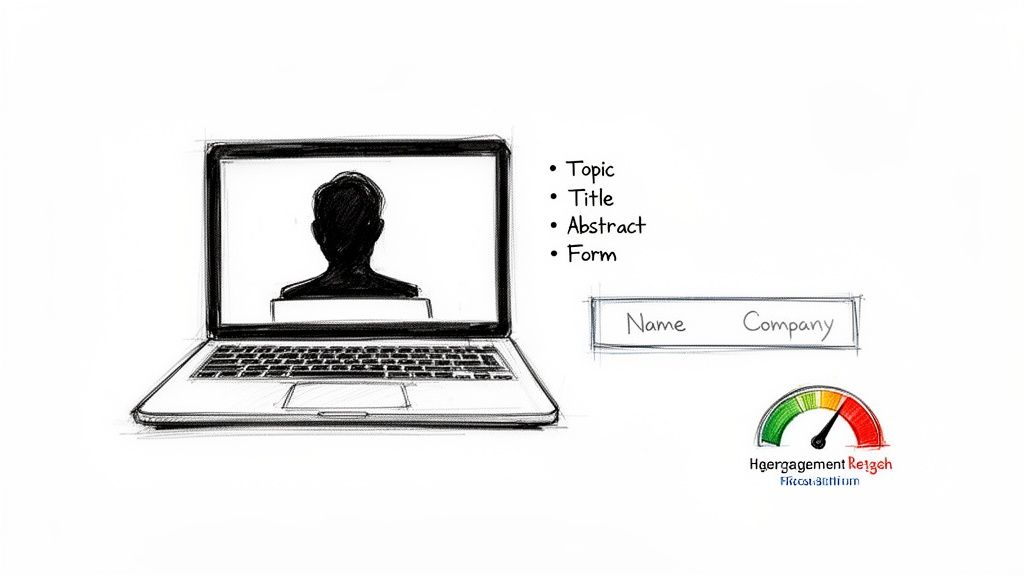
The "After" example works because it targets a pain point (risk), offers a clear benefit (de-risking), sets a time expectation, and identifies a specific audience (FinTechs). Your abstract should then deliver on this promise, using bullet points to outline exactly what attendees will learn. This transparency builds confidence and drives sign-ups.
Designing the Perfect Registration Form
The registration form is a critical balancing act. You need data for lead qualification, but every additional field increases friction. Data shows that reducing form fields from four to just three can boost conversion rates by up to 50%.
Start with the bare essentials:
- First Name
- Last Name
- Work Email
- Company Name
For better qualification, add one or two strategic fields like "Job Title" or a dropdown for "Biggest Business Challenge." This data is gold for audience segmentation and personalising your follow-up nurture sequences.
The Power of Pre-Recorded Webinars
For professional services, a pre-recorded or "simulive" webinar is often the most strategic choice for ensuring professional quality standards. This approach provides complete control, eliminating technical glitches and guaranteeing a polished presentation that reflects your brand.
Crucially, it allows for a thorough compliance and legal review before the content goes public—a non-negotiable for regulated industries. You can still create an engaging "live" experience by broadcasting the recording at a set time and having your experts facilitate a live Q&A. This hybrid model offers the polish of a recording with the immediacy of a live event, delivering an efficient, low-risk way to create a powerful content asset.
At Cloud Present, we are a strategic partner in transforming your experts' knowledge into these broadcast-quality, pre-recorded webinars. We manage the entire production process, enabling your team to focus on exceptional content while we ensure the final asset is perfectly polished and on-brand.
A Practical Guide to Webinar Promotion and Distribution
A brilliant webinar with no audience is a wasted resource. It is where many professional services lead generation strategies fail—not because the content is weak, but because promotion was an afterthought. Driving registrations requires a methodical, multi-channel game plan that builds anticipation and targets the right audience with precision.
For B2B marketing teams trying to reach senior decision-makers, a scattergun approach is a fast way to burn through your budget. An efficient strategy blends the cost-effectiveness of email with the laser-targeting of paid social, especially LinkedIn.
The data supports this approach. When analysing the cost-per-lead for professional services, channel selection is critical for maximising ROI.
Channel Cost-Per-Lead Comparison for Professional Services
This table provides a data-driven perspective on the efficiency of different B2B lead generation channels, helping you allocate budget for the best return.
| Channel | Average Cost Per Lead (UK) | Strategic Use Case |
|---|---|---|
| Email Marketing | £42 | Ideal for nurturing your existing audience and driving high-ROI registrations from warm leads. |
| LinkedIn Ads | £88 | Essential for reaching new, highly-targeted decision-makers based on industry, job title, and company size. |
| Content Syndication | £120 | Good for scaling reach, but often results in lower-intent leads requiring significant nurturing. |
| Search Engine Marketing (PPC) | £150+ | Effective for capturing high-intent leads actively searching for solutions, but can be highly competitive. |
While email is your most cost-efficient play, generating an impressive £36-40 for every £1 spent, you cannot ignore LinkedIn. It's where 80% of B2B social leads originate, making it indispensable for reaching decision-makers in legal, consulting, and finance. For a deeper dive, you can discover more insights about B2B lead generation costs in the UK.
Your Promotional Timeline and Budget
Effective promotion begins long before the event. A 3-4 week timeline is the sweet spot—it provides enough runway to build momentum without causing audience fatigue. This window allows you to prepare promotional assets, segment email lists, and optimise paid campaigns.
Here is a practical implementation plan:
- 3 Weeks Out: Announce the webinar to your most engaged audience: your email subscribers. This soft launch rewards your loyal followers with early access.
- 2 Weeks Out: Launch your paid LinkedIn campaign. Allocate a focused budget; for many firms, a spend of US$500–US$1,000 is sufficient to reach a highly relevant audience of senior leaders.
- 1 Week Out: Send a dedicated email broadcast to your entire marketing list. This is where the bulk of registrations will likely originate.
- Final 72 Hours: Create urgency. Send reminder emails to non-openers and push a "last chance to register" message. Your social channels should run a countdown to build immediacy.
The goal is to create multiple touchpoints across different channels. A prospect might delete an email but then see a sponsored post on their LinkedIn feed an hour later. Blending organic and paid efforts dramatically increases the probability of capturing their attention.
For a more granular breakdown, check out our comprehensive guide on how to promote your webinar.
Crafting Promotional Assets That Convert
Your promotional assets are the sales team for your webinar. Every email, social post, and ad must be sharp, benefit-driven, and designed to drive one action: registration.
Here are the essential assets and how to frame them:
- Email Copy: Keep it concise. Use bullet points to showcase what attendees will learn. Instead of a dense paragraph, try: "In this 45-minute session, you will discover:".
- LinkedIn Ad Copy: Lead with a question that addresses a core pain point. For example: "Struggling with the new ESG reporting mandates? Our upcoming webinar breaks down core compliance requirements in just 45 minutes."
- Social Media Graphics: Use clean, on-brand visuals featuring speaker headshots, the webinar title, and the date/time. A short video clip of a speaker teasing the content almost always outperforms static images.
The biggest mistake is using generic copy everywhere. The person who receives your newsletter has a different relationship with your brand than a cold prospect on LinkedIn. Your messaging must reflect that context.
The Evergreen Lead Generation Machine
Your work is not over when the live webinar ends. For many firms, this is where the real lead generation begins. The on-demand recording is a valuable asset that can generate leads 24/7.
Transitioning to an on-demand strategy is simple but incredibly powerful. Gate the recording behind a registration form on a dedicated, SEO-optimised landing page.
From there, promote the on-demand version perpetually:
- Lead Nurturing Sequences: Incorporate the on-demand webinar into your email nurture campaigns for new leads as a high-value educational touchpoint.
- Blog Post CTAs: Embed a call-to-action for the on-demand webinar directly into relevant blog posts, converting existing traffic into new leads.
- Ongoing Social Promotion: Run a low-cost, "always-on" LinkedIn campaign promoting the recording to fresh audiences, generating a steady stream of high-intent leads long after the live event.
By treating the on-demand recording as an evergreen asset, you transform a one-time event into a sustainable engine for professional services lead generation. As your strategic partner, Cloud Present not only produces broadcast-quality webinars but also maps out this entire distribution strategy, ensuring every content piece delivers maximum, long-term ROI.
Turn One Webinar Into an Entire Content Calendar
A single, well-executed webinar is a goldmine for professional services lead generation. But its true value—and the key to efficiency gains—is realised when you stop seeing it as a one-off event. For resource-constrained B2B content teams, think of it as the cornerstone of your content strategy for an entire quarter.
That 60-minute recording is packed with enough expert insight to fuel your marketing channels for weeks. By methodically repurposing that core asset, you create a steady stream of high-quality content that reinforces your firm's authority across all relevant platforms. This is not just recycling content; it is a strategic atomisation that multiplies ROI.
The Content Repurposing Flywheel
The core concept is simple: take your long-form webinar and slice it into smaller, bite-sized assets tailored for specific platforms. Each new piece of content is designed for a different channel and a different stage of the buyer's journey, dramatically extending the reach and impact of your original investment.
This creates a powerful flywheel effect. Short-form assets—video clips, carousels, quote graphics—drive traffic and engagement. That engagement, in turn, funnels new prospects back to the original, high-value webinar recording, capturing more qualified leads.
The diagram below maps this workflow, from initial promotion to the webinar itself, and ultimately, to demand generation.
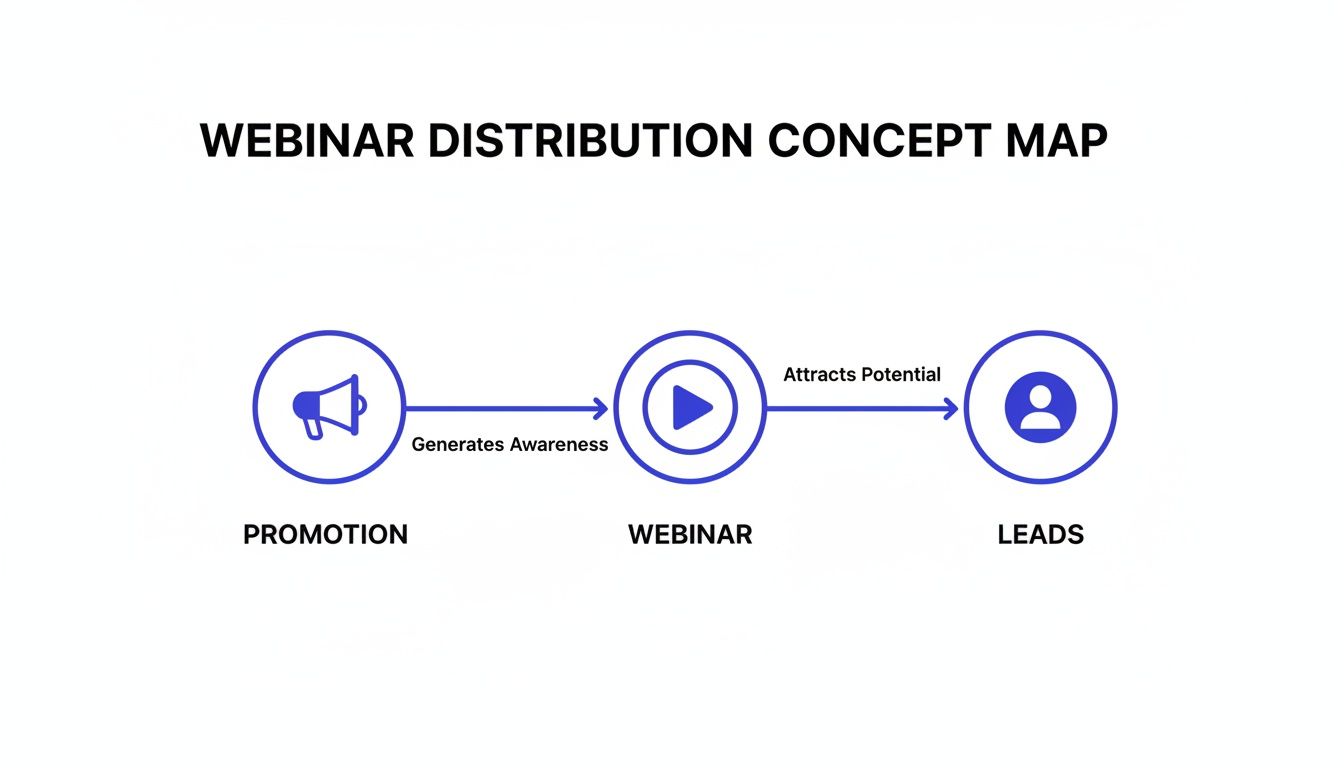
The webinar is the central production engine, but the promotional and repurposing strategy is what turns that engine into a lead-generating machine.
Your 10-Point Repurposing Playbook
Here is a practical, step-by-step guide to transforming one 60-minute recording into over ten distinct content assets. This is an actionable plan for any B2B content team to implement today.
The SEO-Optimised Blog Post: Transcribe the webinar using a tool like Descript or Otter.ai. Use the transcript as the foundation for a comprehensive, 2,000-word blog post. Structure it with clear headings (H2s, H3s), integrate relevant keywords, and embed the on-demand webinar video directly within the article. This turns spoken content into a long-term SEO asset that works 24/7.
Short-Form Video Clips (Reels/Shorts): Analyse the recording to identify three to five "golden nuggets"—a startling statistic, a surprising insight, or a practical tip. Use a video editing tool to clip these into 30-60 second vertical videos with branded captions. These are perfect for LinkedIn, Instagram Reels, and YouTube Shorts algorithms.
LinkedIn Carousel Post: Extract the top five key takeaways from the presentation. Use a tool like Canva to design a clean, professional carousel. Each slide should feature one key insight with a bold heading and minimal text. This highly shareable format drives significant engagement on your company's LinkedIn page.
A single webinar provides the raw material for a multi-channel thought leadership campaign. Instead of asking "What should we post today?", the question becomes "Which insight from our expert webinar should we share today?". This shift is fundamental for achieving consistent content output with limited resources.
Expanding Your Reach Even Further
Once you have these core assets, you can continue to slice and dice the content to reinforce your message across more channels without creating anything new from scratch.
- Quote Graphics: Isolate powerful quotes from your speakers. Create visually appealing graphics with the speaker's headshot and your company branding for social platforms.
- Audio Snippets for a Podcast or Audiograms: If your firm has a podcast, the webinar audio can become a full episode. Alternatively, create short "audiograms"—a static image with an animated waveform and captions—to share audio clips on social media, reaching audiences who prefer listening.
- Email Nurture Sequence: Deconstruct the webinar’s main points into a three-part email series. Each email can explore a key theme, always linking back to the on-demand recording or the full blog post, effectively nurturing new leads.
- SlideShare Presentation: Upload the original presentation deck to SlideShare. The platform has strong SEO value and can attract a professional audience actively researching your topic.
Getting More ROI Through Multi-Channel Engagement
This content repurposing strategy is not just about efficiency; it is about driving better business outcomes. For professional services lead generation, a multi-channel approach is mandatory. Companies using multiple touchpoints see conversion rates increase by 287% compared to single-channel campaigns.
More specifically, strategies combining email with LinkedIn outreach deliver 34% higher response rates than email alone. By atomising your webinar, you are building the exact assets required to execute this type of high-performance strategy. You can find more practical content repurposing strategies to help extend your reach.
As a strategic partner, Cloud Present builds this entire workflow into our service. We deliver a complete content package—the polished webinar recording, video clips, audiograms, and transcriptions needed to fuel your content calendar. It’s an end-to-end approach that ensures every webinar becomes a long-term, lead-generating asset with a measurable return.
How to Measure and Prove Your Webinar ROI
Connecting marketing efforts to tangible business outcomes is non-negotiable. For any professional services lead generation programme built on virtual events, proving return on investment (ROI) is what secures budget and earns marketing a strategic seat at the table. It is time to move past vanity metrics like registration numbers and focus on the KPIs that directly impact revenue.
Success is not defined by how many people signed up; it is defined by how many qualified sales conversations were initiated. This requires tracking the entire journey, from webinar registration to closed-won deal, to confidently demonstrate marketing's contribution to the bottom line.
Moving Beyond Vanity Metrics
First, shift your focus from top-of-funnel activity to bottom-funnel impact. While attendance rates provide a health check on promotion, they do not prove business value. The metrics that your leadership team cares about are tied directly to pipeline and revenue.
Your measurement framework should be built around these three pillars:
- Marketing Qualified Leads (MQLs): Attendees who match your ideal client profile (e.g., specific job title, company size) and have shown high engagement (e.g., asked a question, watched 75% of the content).
- Sales Qualified Leads (SQLs): MQLs that the business development team has vetted and confirmed have a genuine, near-term need for your services. This is where marketing’s influence becomes undeniable.
- Pipeline Influence: The total value of all sales opportunities that interacted with your webinar at any point in their journey. This powerful metric shows how your content nurtures and accelerates deals, even if it was not the first touchpoint.
The most compelling story you can tell is how a single US$5,000 webinar influenced a seven-figure deal. Tracking pipeline influence allows you to draw a direct line from your content to significant revenue, proving its strategic importance far beyond a simple lead count.
A Simple Formula for Calculating Webinar ROI
Calculating ROI does not need to be complex. A straightforward formula can balance your investment against the generated value, providing a clear, defensible figure to present to leadership.
The basic formula is: (Value of Leads Generated - Total Webinar Cost) / Total Webinar Cost x 100 = ROI %
To put this into practice, you need two key inputs:
- Total Webinar Cost: Sum all expenses, including platform fees, paid promotion (e.g., a US$1,000 LinkedIn campaign), and the cost of any production services.
- Value of Leads Generated: Work with your sales team to assign an estimated value to each MQL and SQL based on historical conversion rates and average client lifetime value (LTV).
For example, a webinar costs US$5,000 to produce and promote. It generates 10 SQLs, and based on past data, each has an average potential value of US$2,000, for a total lead value of US$20,000. The calculation, (20,000 - 5,000) / 5,000 x 100, reveals a 300% ROI. This framework instantly transforms your marketing activities into a compelling business case.
Leveraging Engagement Data for Deeper Insights
Beyond quantitative ROI, the engagement data from your webinar is a goldmine for refining your content strategy. This qualitative data helps you understand what truly resonates with your audience, enabling you to create more effective content in the future. For robust ROI measurement, it is not enough to just track; you must also apply post-campaign optimization for better ROI by turning these insights into actionable improvements.
Drill down into these engagement metrics:
- Audience Retention Rate: Identify where viewers dropped off. This is the clearest indicator of which sections were most engaging and which may need refinement.
- Questions Asked: Q&A topics provide a direct pipeline into your audience's most pressing challenges. Use these to inform your next webinar or blog post topic.
- Poll Responses: Interactive polls give you instant feedback on audience priorities, pain points, and level of understanding.
At Cloud Present, our performance dashboard is designed to surface these critical metrics automatically. We help you move beyond basic analytics to understand not just what happened, but why it happened, providing the data-driven insights needed to continuously improve your professional services lead generation efforts. For a deeper dive, learn more about the 7-metric framework that proves marketing impact in our dedicated guide.
Answering Your Questions
When building a webinar strategy from the ground up, several practical questions always arise. Here are the most common ones from B2B marketing teams, with straight-talking advice based on what actually works.
How Long Should a Professional Services Webinar Be?
Aim for the sweet spot: 45 to 60 minutes. Any longer, and you risk a significant drop-off in attention, especially from the senior decision-makers you are targeting.
This structure allows for a solid 30-40 minutes of in-depth value delivery from your experts, which is crucial for building authority. Critically, it leaves 10-15 minutes for Q&A. This is often where the most valuable interactions occur—you gain direct insight into audience pain points and can identify genuine buying signals.
Unless you are running a formal training session for CPE or CLE credits, keep it concise. Respect their time, deliver incredible value, and leave them wanting more.
What Is the Best Way to Gate Webinar Content for Lead Capture?
Use a nuanced, hybrid approach to balance audience reach with qualified lead capture.
Think in two stages:
- The Live Event: Gate the live webinar, but keep the registration form simple: Name, email, company. The goal is to reduce friction and maximise sign-ups for the live broadcast.
- The On-Demand Recording: This is where you can ask for more. Gate the replay behind a form that includes qualifying fields like job title or "biggest business challenge." Anyone willing to complete this form for a recording signals significantly higher purchase intent.
A quick note on your repurposed assets—the blog post, social clips, and infographics. Leave them ungated. Their function is to achieve broad reach and act as signposts that direct interested prospects back to your gated on-demand recording.
This strategy provides the best of both worlds: a large initial audience and a sustainable pipeline of warmer, more qualified leads trickling in over time.
Should We Use Live or Pre-Recorded Webinars?
For most professional services firms, I strongly recommend pre-recorded webinars. Broadcasting it "simulive"—a pre-recorded session followed by a live Q&A—offers a powerful combination of quality control and real-time engagement.
The biggest benefit is risk elimination. Pre-recording means no technical glitches, no awkward speaker handoffs, and no dead air. It ensures a polished, broadcast-quality presentation that reflects the high professional standards of your firm.
Even more critically, especially for firms in regulated sectors like finance or law, is the ability to secure full compliance and legal review before the content goes public. This is a non-negotiable. Your experts can still join the broadcast to answer questions live after the recording airs, providing that crucial interactive element without any of the live-broadcast risks.
At Cloud Present, we are more than a platform; we are your strategic production partner. We transform your firm's expertise into polished, pre-recorded webinar assets and a full suite of repurposed content to fuel your demand generation engine. Your team focuses on what they do best, and we handle the rest. Discover our process at https://www.cloudpresent.co.


