Lead nurturing best practices: 8 Actionable Tips for B2B Services
Discover lead nurturing best practices to boost B2B conversions with practical tips, templates, and case-ready strategies.
For B2B SaaS marketing professionals, the gap between a new lead and a signed client is a critical battleground. Limited resources, the relentless need for high-quality content, and mounting pressure for tangible demand generation create a perfect storm. Generic lead nurturing, such as batch-and-blast emails and one-size-fits-all content, no longer delivers the required ROI. Prospects demand personalised, value-driven engagement that respects their time and addresses their specific business challenges.
This is where strategic webinar production and intelligent content repurposing become indispensable. This article details 10 actionable lead nurturing best practices, moving beyond theory to provide concrete implementation steps, specific metrics, and real-world examples. We will explore how to build a sophisticated nurture engine that not only educates and engages but also demonstrably shortens sales cycles and boosts revenue.
You will learn precisely how to:
- Build segmented email campaigns and multi-touch content calendars.
- Leverage interactive webinar assets to capture and qualify leads.
- Align sales and marketing for seamless lead handoff processes.
- Develop re-engagement campaigns to reactivate dormant prospects.
Each practice is designed to be immediately applicable, helping you transform potential interest into a robust sales pipeline and positioning your firm as a strategic partner, not just another service provider.
1. Implement a Segmented Email Nurture Campaign Strategy
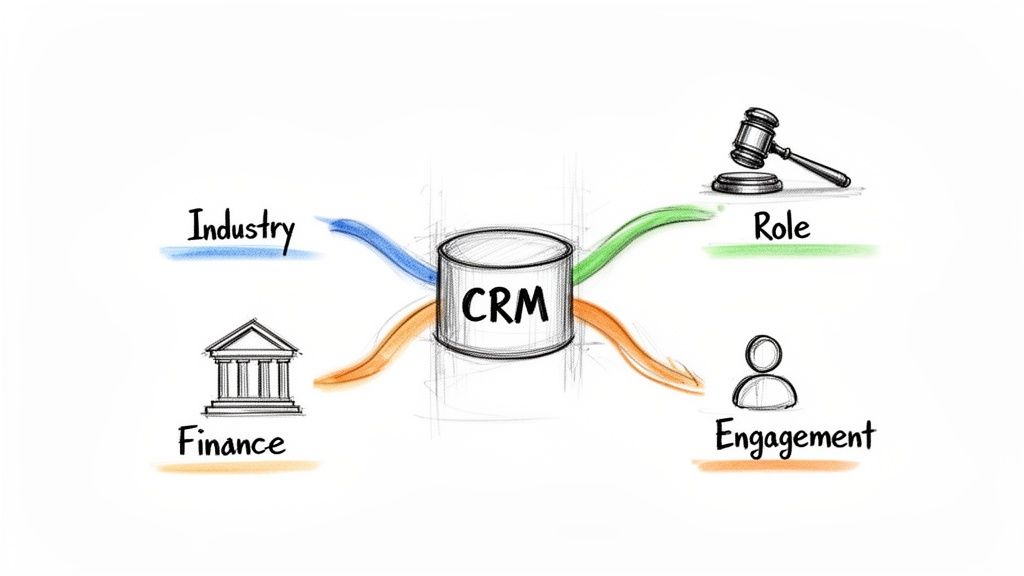
A one-size-fits-all approach to lead nurturing is a recipe for low engagement and missed opportunities. One of the most foundational lead nurturing best practices is implementing a segmented email campaign strategy. This involves dividing your prospect database into distinct, smaller groups based on shared characteristics like industry, role, engagement level, or stage in the buyer journey. This ensures that every communication is highly relevant, addressing specific pain points and business goals with precision.
Why It Matters
For B2B SaaS companies, generic content simply doesn't resonate. A fintech SaaS targeting both enterprise banks and agile startups must address entirely different operational challenges. By segmenting, you transform a generic message into a direct, valuable conversation, significantly increasing open rates, click-through rates, and ultimately, conversions. Companies using segmentation have seen email open rates increase by as much as 20%.
How to Implement It with Webinars
Webinars are a powerful tool for creating segment-specific content at scale. A MarTech SaaS, for instance, could host a webinar on "The Future of Content Personalisation".
- Segment Creation: Create separate audience segments in your marketing automation platform for "Content Marketers," "Demand Gen Managers," and "CMOs."
- Targeted Promotion: Promote the webinar with tailored email invitations for each segment. For Content Marketers, highlight creative workflow efficiencies. For CMOs, focus on ROI and pipeline impact.
- Post-Webinar Nurturing: Following the event, send each segment a different follow-up sequence. The Content Marketer track might receive an implementation template, while CMOs get a business case for the technology.
Key Insight: The true power of segmentation lies in the follow-up. Use your webinar platform's analytics to identify which topics resonated most with each segment and tailor your nurture sequences accordingly.
Cloud Present Pro-Tip: Maximise Your ROI
Don’t let your webinar content exist in a single form. Use Cloud Present to effortlessly clip your full-length webinar into shorter, segment-specific videos. A one-hour webinar on "AI in Marketing" can become five distinct micro-assets, each targeting a different user persona or industry vertical, fuelling your segmented nurture campaigns for weeks without additional production costs.
2. Create a Multi-Touch Content Calendar with Strategic Asset Sequencing
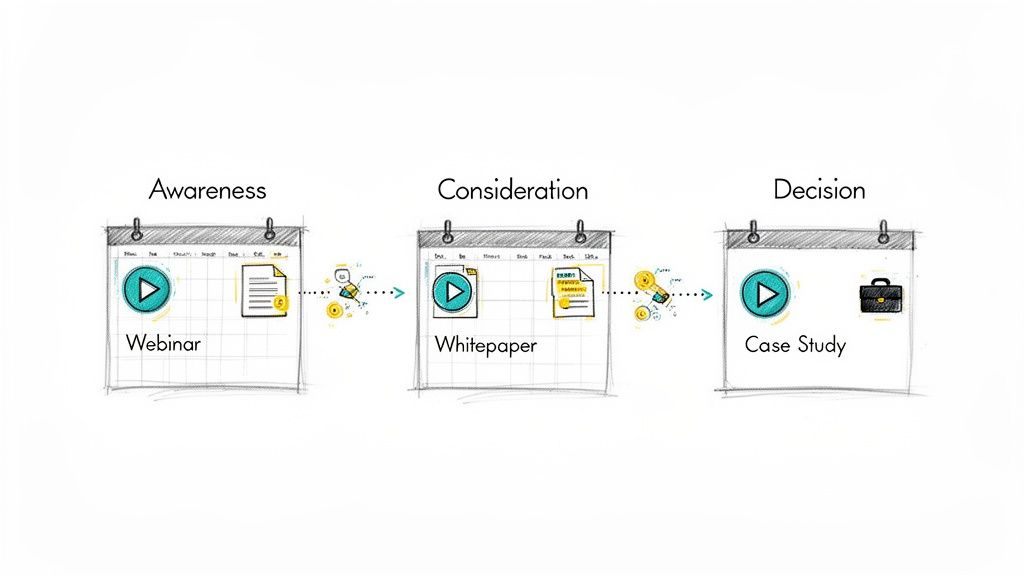
Sporadic content delivery fails to build the momentum needed to guide a prospect through a complex buying decision. One of the most critical lead nurturing best practices is to develop a multi-touch content calendar with strategic asset sequencing. This involves planning a cohesive 6-12 month series of touchpoints—like webinars, white papers, and case studies—that align perfectly with the stages of the buyer journey, keeping your firm top-of-mind and building undeniable authority over time.
Why It Matters
For SaaS solutions, trust isn't built in a single interaction; it's cultivated through consistent, valuable engagement. A strategic content calendar demonstrates foresight and expertise, proving your company is a reliable partner. Multi-touch campaigns that combine various formats like video, email, and gated content consistently outperform single-channel approaches, increasing engagement at every stage. A well-organised sequence ensures you deliver the right message at the right time, preventing prospect drop-off.
How to Implement It with Webinars
Webinars serve as ideal anchor assets for your content calendar, providing high-value, in-depth content that can be atomised into smaller pieces. A project management SaaS, for instance, can map out a quarterly webinar series targeting different buyer journey stages.
- Awareness Stage: Host a broad, industry-focused webinar on "The Top 5 Productivity Killers for Remote Teams" to attract a wide audience.
- Consideration Stage: Six weeks later, follow up with a more focused webinar on "Choosing the Right Project Management Tool," using attendance data from the first event for targeted promotion.
- Decision Stage: Conclude the quarter with a "How [Client Name] Increased Project Delivery by 30%" webinar, showcasing a real-world case study of your platform's impact, followed by personalised demo offers.
Key Insight: The cadence is just as important as the content. Spacing your anchor webinar events 4-6 weeks apart, with complementary assets like checklists and ROI calculators released in between, creates a persistent and non-intrusive presence.
Cloud Present Pro-Tip: Maximise Your ROI
Stop planning content one asset at a time. Use Cloud Present to batch-produce your entire quarter's webinar content in a single session. This massively improves efficiency and ensures brand consistency. Plan your repurposing from the outset; schedule time to create clips, transcripts, and social media assets during initial production, turning each one-hour webinar into a month's worth of multi-channel content that fuels your strategic sequence.
3. Leverage Interactive and Gated Webinar Assets for Lead Capture
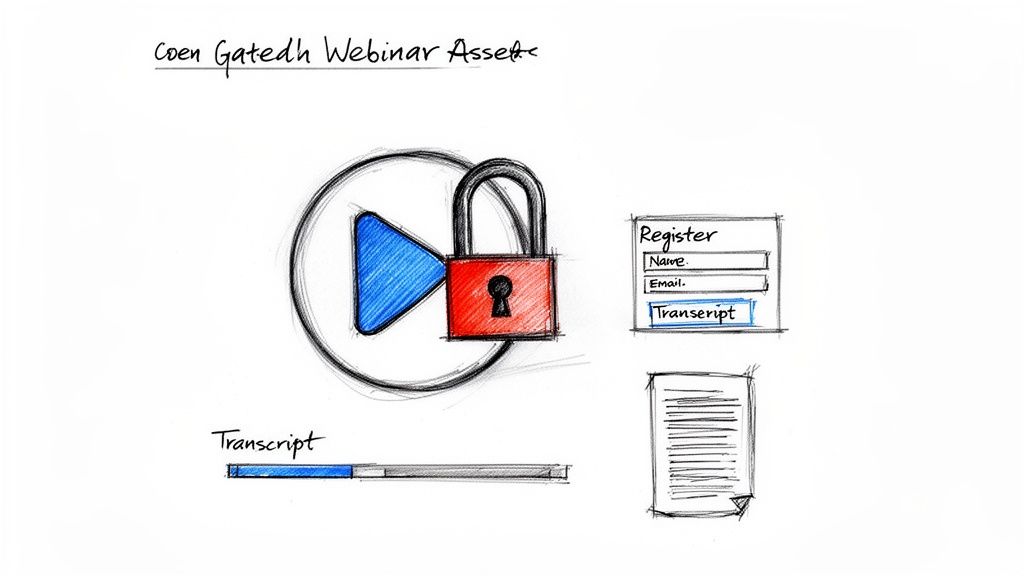
Your webinar's value doesn't end when the live event is over. A crucial lead nurturing best practice is to transform on-demand recordings and related materials into lead generation engines by "gating" them. This means requiring prospects to provide their contact information via a form to access high-value content, turning passive content consumption into an active lead capture opportunity for your business.
Why It Matters
In B2B SaaS, expertise is your most valuable asset. Gating content allows you to capture high-intent leads who may have missed the live session but are still actively seeking solutions. A cybersecurity SaaS, for example, can gate a webinar recording on "Preparing for the Latest Data Privacy Regulations," effectively building a prospect list of engaged IT security professionals. This strategy provides a continuous return on your initial content investment, fuelling your pipeline long after the event date.
How to Implement It with Webinars
Instead of simply offering a "watch now" button, strategically gate the most valuable components of your webinar package to maximise lead capture. A sales enablement platform could use this method after a webinar on improving sales team performance.
- Asset Gating: Gate the full one-hour on-demand recording and the downloadable sales script templates behind a registration form.
- Tiered Access: Leave a short, two-minute summary clip ungated on the landing page to serve as a compelling preview, demonstrating value before asking for contact details.
- Automated Delivery: Set up an automated email sequence that immediately delivers the requested asset upon form submission and simultaneously enters the new lead into a relevant nurture track focused on sales productivity. You can find more strategies for professional services lead generation on our blog.
Key Insight: The language on your gate matters. Instead of a generic "Submit," use action-oriented copy that highlights the value, such as "Download the Full Template Library" or "Access Your Sales Checklist Now."
Cloud Present Pro-Tip: Maximise Your ROI
Don't treat all gated content the same. With Cloud Present, you can create multiple gated assets from a single event. Gate the full recording for broad lead capture, then create a separate, more detailed gate for a "deep-dive" clip on a niche topic. Use our platform to set up progressive profiling on these forms, asking for different information from known versus new leads to enrich your CRM data without creating friction for returning visitors.
4. Measure, Personalise, and Optimise Lead Nurture Campaigns
Lead nurturing without measurement is like navigating without a compass. To truly excel, you must combine behavioural personalisation with rigorous analytics. This essential lead nurturing best practice involves monitoring how prospects interact with your content, from webinar attendance to asset downloads, and using that data to continuously refine your strategy for maximum impact.
Why It Matters
Data-driven optimisation transforms your nurturing from guesswork into a precise, revenue-generating engine. An HR tech firm, for instance, might discover that its webinar on 'Improving Employee Onboarding' drives a 35% higher MQL-to-SQL conversion rate than its general HR trend updates. This insight allows them to double down on high-performing topics and reallocate resources effectively. To ensure your lead nurturing campaigns are truly effective and delivering tangible results, it's crucial to accurately measure content marketing ROI.
How to Implement It with Webinars
Webinars are a goldmine of behavioural data that can fuel highly personalised nurture tracks. A customer support SaaS can use webinar engagement to identify high-intent leads.
- Establish Baselines: Before launching a new webinar campaign, document your current metrics: email open/click-through rates, MQL conversion, and content consumption rates.
- Track Engagement: Use your webinar platform's analytics to monitor which attendees re-watch specific clips, download related transcripts, or have high view-completion rates. You can explore a detailed guide to effective webinar analytics to learn more.
- Trigger Personalised Outreach: Set up automated triggers. For example, if a support manager downloads a transcript on reducing ticket resolution times, an alert is sent to the relevant account executive for personalised outreach, armed with the context of the prospect's interest.
Key Insight: Define behavioural thresholds that signal sales-readiness. For example, a prospect who views three or more video clips or downloads over 50% of your gated assets may be showing strong buying intent, warranting direct follow-up from your business development team.
Cloud Present Pro-Tip: Turn Analytics into Action
Use Cloud Present's detailed analytics dashboard to track viewer engagement at a granular level. Identify the exact moments in your webinar that prospects re-watch or share. This allows you to pinpoint their specific pain points and enables your sales team to initiate conversations that are perfectly timed and incredibly relevant, dramatically shortening the sales cycle.
5. Develop Vertical-Specific Thought Leadership Webinar Series
One-off webinars are effective, but a recurring, vertical-specific series transforms your company into an indispensable resource. This advanced lead nurturing best practice involves creating a dedicated webinar series for a specific industry, such as a monthly "Retail Tech Today" for e-commerce leaders. By delivering consistent, high-value content, you build a loyal subscribed audience and establish deep authority within a niche, moving beyond simple lead generation to cultivating a dedicated community.
Why It Matters
SaaS buyers seek sustained guidance, not sporadic advice. A recurring series on a topic like "Logistics & Supply Chain Optimisation" demonstrates a long-term commitment to their industry's challenges. This consistency fosters trust and keeps your brand top-of-mind. By creating a predictable schedule of value, you justify higher-frequency nurture communications, as subscribers anticipate and welcome your updates, leading to significantly higher engagement rates over time compared to standalone events.
How to Implement It with Webinars
A supply chain SaaS aiming to penetrate the e-commerce sector could launch a "Future of Fulfilment" series.
- Series Planning: Before launch, plan the first 3-4 episode topics to show commitment. Topics could include "AI in Warehouse Management," "Last-Mile Delivery Innovations," and "Returns Optimisation Strategies."
- Dedicated Landing Page: Create a central landing page for the series. This page should house recordings of past episodes, list upcoming topics, and feature a single sign-up form for the entire series.
- Consistent Promotion: Promote each new episode to the series subscriber list and new prospects. Use the continuity to build excitement, for example, "In our last episode, we discussed warehousing; next month, we'll tackle last-mile delivery."
Key Insight: The power of a series lies in its cumulative value. Each new episode not only engages attendees but also enriches your content library, creating a powerful, evergreen asset that attracts and nurtures leads long after the live events are over.
Cloud Present Pro-Tip: Maximise Your ROI
Managing a series can be resource-intensive. Use Cloud Present to streamline production and repurposing. Batch-record several episodes in a single session with your subject matter experts to create a quarter's worth of content efficiently. Then, use the platform’s editing tools to package each recording as a polished, on-demand episode for your series library, ensuring a consistent and professional brand experience with minimal ongoing effort.
6. Integrate Sales and Marketing Alignment with Defined Handoff Processes
Even the most sophisticated nurturing programme will fail if there is a gap where leads should transfer from marketing to sales. One of the most critical lead nurturing best practices is creating explicit, automated handoff processes. This involves establishing clear, data-driven criteria that define exactly when a prospect is ready for sales engagement, preventing high-value leads from falling through the cracks.
Why It Matters
Without a defined handoff, marketing-qualified leads (MQLs) can languish for days, losing the momentum built during nurturing. This friction not only results in lost revenue but also creates tension between teams. A successful lead nurturing programme is a cornerstone of an effective marketing and sales strategy, requiring tight integration and shared goals. By systemising the handoff, you ensure that sales receives timely, context-rich alerts, enabling them to engage with peak-interest prospects within minutes, not days.
How to Implement It with Webinars
Webinars are excellent for identifying sales-ready signals. A CRM SaaS can use webinar engagement to trigger a handoff to their sales development team.
- Define Handoff Criteria: Collaboratively with sales, define what constitutes a sales-ready lead. For instance, a Director-level contact from a target company who attends a live webinar and then downloads the associated case study within 48 hours is flagged as an MQL.
- Automate CRM Triggers: Set up a workflow in your marketing automation platform. When a lead meets the defined criteria, it should automatically change their status in the CRM and assign them to a specific sales representative.
- Create Real-Time Alerts: Configure the system to send an instant Slack or SMS notification to the assigned representative, including the lead’s name, company, and the specific actions they took (e.g., "Watched ‘Improving Sales Pipeline Visibility’ webinar").
Key Insight: The handoff process must include context. Don't just send a name and email. Bundle the assets the lead engaged with, providing sales with the exact webinar topic and resources to frame a highly relevant opening conversation.
Cloud Present Pro-Tip: Maximise Your ROI
Enrich your sales handoff materials with compelling, bite-sized video content. Use Cloud Present to clip the most impactful Q&A moment or a key data point from your webinar. Embed this short clip directly into the sales notification email. This equips your sales team with a powerful, context-rich asset to share in their initial outreach, dramatically increasing their chances of booking a meeting.
7. Create Compliance-Focused Content Tracks for Regulated Industries
For SaaS companies serving highly regulated sectors like fintech, health tech, and legal tech, content must do more than just inform; it must often address strict compliance standards. A powerful lead nurturing best practice is to create dual-purpose content tracks that deliver critical compliance insights while simultaneously nurturing high-value prospects. This transforms a major customer pain point into a strategic demand generation engine.
Why It Matters
Professionals in these fields are constantly seeking information on complex regulations like GDPR, HIPAA, or financial reporting standards. By offering webinars that demystify these topics, you provide immense value and position your platform as an indispensable, compliance-aware solution. This approach attracts a highly qualified audience of decision-makers actively seeking solutions, effectively filtering for leads who take their regulatory obligations seriously. It builds trust and credibility far more effectively than a standard marketing webinar.
How to Implement It with Webinars
A HealthTech SaaS can develop a quarterly webinar series on "Navigating HIPAA Compliance for Digital Health Platforms." This not only serves existing clients but also attracts CTOs and compliance officers from prospect companies.
- Expert Collaboration: Partner with a legal expert or compliance consultant to co-host the webinar, adding a layer of third-party credibility to your content.
- Compliance-Specific Gating: Create a detailed checklist or "Compliance Readiness Guide" as a downloadable asset. Gate this behind a form to capture high-intent leads who are actively looking to solve compliance challenges.
- Audit-Ready Archiving: Following the webinar, ensure all materials, including the recording, presentation slides, and an accurate transcript, are archived with clear metadata. This content can be repurposed for future compliance-focused campaigns.
Key Insight: The value proposition shifts from "learn about our software" to "learn how to solve your biggest compliance headache." This simple change dramatically increases the perceived value and urgency of your content.
Cloud Present Pro-Tip: Ensure Audit-Proof Accuracy
Compliance demands precision. Use Cloud Present’s guaranteed accurate transcription service to create a word-for-word record of your compliance webinar. This transcript is not just a repurposing asset; it can be used to create detailed blog posts, white papers, and FAQs that demonstrate your deep expertise and provide prospects with unimpeachable, trustworthy information.
8. Establish Cadence Rules and Frequency Testing to Prevent Nurture Fatigue
Bombarding prospects with too much content is just as ineffective as sending too little. One of the most critical lead nurturing best practices is to establish and test your communication cadence. This involves setting rules for how frequently you contact leads and continuously testing to find the optimal balance that maintains engagement without causing prospects to tune out or, worse, unsubscribe.
Why It Matters
Nurture fatigue is a real threat to your pipeline. Over-communication can make your company seem desperate and lead to high unsubscribe rates, damaging your sender reputation. A SaaS company, for instance, might find that sending product updates twice weekly causes unsubscribe rates to spike above 5%, while a bi-weekly cadence performs optimally with an 18% open rate. By respecting your audience's inbox, you build trust and ensure your messages are welcomed, not deleted.
How to Implement It with Webinars
Webinars provide a perfect opportunity to gauge engagement and adjust your communication frequency accordingly. A marketing automation platform could host a webinar on "Boosting Email Engagement".
- Segment by Engagement: After the event, create two segments: "Highly Engaged" (attended live, asked questions) and "Low Engagement" (registered but did not attend).
- Test Different Cadences: Send the "Highly Engaged" segment a more frequent follow-up sequence with case studies and related articles. For the "Low Engagement" group, test a lower cadence, perhaps starting with a single, high-value email containing the webinar recording and a key insight.
- Analyse and Adjust: Monitor the open, click-through, and unsubscribe rates for both segments. If the lower cadence re-engages the second group, you've successfully avoided fatigue while recovering a potentially lost lead.
Key Insight: Don’t just set a single cadence for all prospects. Use engagement data from your marketing automation platform to automatically move less-engaged leads into a slower nurture track, preventing them from unsubscribing due to content overload.
Cloud Present Pro-Tip: Maximise Your ROI
Use engagement metrics from your on-demand webinar to inform cadence decisions. With Cloud Present, you can see exactly which parts of your webinar replay a prospect watched or re-watched. If a lead from a cold nurture track views a 5-minute clip on cost-saving features, it’s a strong signal to increase the communication frequency with more content on that specific topic, moving them into a more active nurture stream. This data-driven approach turns passive content into an active trigger for personalised cadence adjustments.
9. Implement Account-Based Marketing (ABM) Nurture Tracks for High-Value Prospects
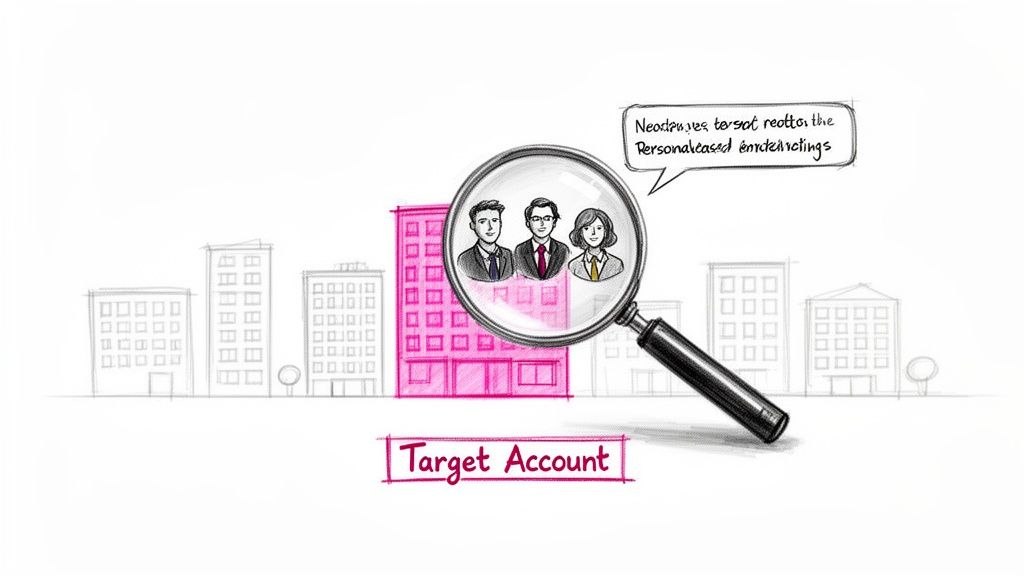
While broad nurturing strategies are essential, your most valuable prospects demand a bespoke approach. A critical lead nurturing best practice is implementing Account-Based Marketing (ABM) nurture tracks. This strategy flips the traditional marketing funnel, treating each high-value target account as its own market. It involves using deep firmographic research to deliver hyper-personalised content and coordinated outreach to a buying committee, not just an individual lead.
Why It Matters
For B2B SaaS companies, landing a single enterprise client can be transformative. ABM focuses your resources where they will have the greatest impact, moving away from volume-based metrics to account-centric goals like penetration and deal velocity. By personalising outreach based on an account's specific tech stack, competitive landscape, or known business challenges, you demonstrate a level of insight that generic campaigns cannot match, dramatically accelerating the sales cycle for key accounts.
How to Implement It with Webinars
Webinars are the perfect vehicle for executing a high-touch, content-led ABM strategy. Imagine a data analytics SaaS targeting five specific enterprise companies in the retail sector.
- Account-Specific Research: Identify a pressing challenge unique to those five accounts, such as inventory management disruption caused by new consumer trends.
- Hyper-Personalised Invitations: Create a private, invitation-only webinar titled "Leveraging Predictive Analytics for Retail Inventory: A Strategic Briefing for [Target Company Name]". Send personalised invitations to 3-5 key decision-makers within each target account.
- Customised Content: During the webinar, reference public information about the target companies to make the content feel exclusive and directly relevant. Address their specific supply chain models or market positions.
Key Insight: The goal of an ABM webinar isn't hundreds of attendees. It's about getting the right five to ten people in the virtual room. Success is measured by account engagement and progression, not just lead volume.
Cloud Present Pro-Tip: Maximise Your ROI
After your exclusive ABM webinar, don’t let the engagement stop. Use Cloud Present to create a password-protected, branded content hub for each target account. Upload the full webinar recording, clip key moments tailored to different stakeholders (e.g., finance, operations), and add supplementary resources like case studies and ROI calculators. This creates a persistent, personalised asset that the buying committee can share internally, keeping your solution top-of-mind.
10. Develop Re-engagement Campaigns to Reactivate Dormant Prospects
Not every lead maintains constant engagement. It’s natural for some prospects to go quiet, but that doesn't mean they are a lost cause. A crucial component of any robust lead nurturing best practices is a re-engagement strategy designed to reactivate dormant contacts. This involves creating targeted campaigns for prospects who haven't interacted (e.g., opened or clicked) in a set period, like 90+ days, to rekindle their interest and bring them back into the active buyer journey.
Why It Matters
Acquiring a new prospect is significantly more expensive than retaining or reactivating an existing one. Ignoring your dormant database is like leaving money on the table. A well-executed win-back campaign can reactivate a meaningful portion of these contacts, often with a higher ROI than top-of-funnel initiatives. For SaaS, re-engagement is about reminding prospects of your platform’s value in the context of their evolving business challenges.
How to Implement It with Webinars
Webinars are the perfect catalyst for a re-engagement campaign, offering fresh, high-value content that justifies a new touchpoint. For instance, a collaboration software company can re-engage prospects who last attended a webinar in Q1 with a new event covering Q3 productivity trends.
- Segment Creation: Create a dynamic list in your marketing automation system that automatically adds contacts who have shown no email engagement for over 90 days.
- Targeted Promotion: Launch an email campaign specifically for this dormant segment, promoting a new, relevant webinar. The messaging should lead with value, for example, "Based on your past interest in remote work, here’s our latest analysis on hybrid team productivity."
- Post-Webinar Nurturing: Track who registers and attends. This action automatically moves them out of the dormant segment and into a new, active nurture sequence based on the fresh content they just consumed.
Key Insight: The hook for re-engagement must be new and compelling. Don't just ask, "Where have you been?" Instead, offer them a valuable reason to return, such as exclusive insights from a new webinar or a recently published case study in their industry.
Cloud Present Pro-Tip: Maximise Your ROI
Your dormant list is diverse. Use Cloud Present to create a variety of micro-content from a single re-engagement webinar. Clip a two-minute segment on a specific new feature for one part of your dormant list and another three-minute clip on a new integration for another. This allows you to test different value propositions with minimal effort, maximising the chances of re-capturing attention across your entire dormant database.
Lead Nurturing Best Practices — 10-Point Comparison
| Item | Implementation complexity | Resource requirements | Expected outcomes | Ideal use cases | Key advantages |
|---|---|---|---|---|---|
| Implement a Segmented Email Nurture Campaign Strategy | Medium–High: requires segmentation logic and upkeep | Robust CRM, data hygiene, targeted content assets | Higher open/CTR, improved conversion and deal velocity | Firms with diverse user personas/industries (MarTech, FinTech) | Personalised relevance at scale; persona-aware messaging |
| Create a Multi-Touch Content Calendar with Strategic Asset Sequencing | Medium: upfront planning and cross-team coordination | Content production schedule, editorial resources, channel coordination | Stronger brand authority, higher sustained engagement | Long-term demand generation and thought leadership programs | Consistent buyer journey guidance; improved cross-team alignment |
| Leverage Interactive and Gated Webinar Assets for Lead Capture | Low–Medium: gating setup and asset workflows | Gated landing pages, registration systems, follow-up automation | Increased lead capture and intent data, smaller audience size | Lead generation-focused campaigns and high-value content | Captures contact info and engagement signals; fuels pipeline |
| Measure, Personalize, and Optimize Lead Nurture Campaigns | High: analytics, attribution, and integration work | Advanced analytics, CRM integration, reporting cadence | Better lead prioritization, improved ROI, reduced nurture fatigue | Data-driven organizations seeking continuous improvement | Behaviour-based personalisation; clear performance-driven optimisation |
| Develop Vertical-Specific Thought Leadership Webinar Series | Medium: recurring production and topic planning | Subject-matter experts, series branding, production resources | Audience loyalty, growing asset library, elevated authority | Industry-focused SaaS wanting sustained visibility | Deep industry credibility; repeat attendance and library growth |
| Integrate Sales and Marketing Alignment with Defined Handoff Processes | Medium–High: process design and change management | Lead scoring, CRM workflows, sales enablement content | Faster handoffs, higher MQL→SQL conversion, fewer missed opps | Organisations needing tighter sales-marketing coordination | Clear accountability; sales-ready signals tied to content |
| Create Compliance-Focused Content Tracks for Regulated Industries | High: expert collaboration, precise content, documentation | Legal/compliance experts, precise production, documentation | Dual-purpose education and lead gen, high-intent leads | Regulated sectors (FinTech, HealthTech, LegalTech) | Solves a major pain point while generating quality leads |
| Establish Cadence Rules and Frequency Testing to Prevent Nurture Fatigue | Medium: testing framework and automation | Marketing automation, A/B testing, segmentation rules | Lower unsubscribe rates, optimised engagement frequency | High-volume email programs and mixed-channel campaigns | Reduces fatigue and duplicate messaging; data-driven frequency |
| Implement Account-Based Marketing (ABM) Nurture Tracks for High-Value Prospects | High: bespoke content and intensive coordination | Account research, personalised assets, dedicated sales support | Higher conversion for target accounts, faster larger deals | High-value targets, enterprise sales, strategic partnerships | Highly personalised outreach; coordinated buying-committee engagement |
| Develop Re-engagement Campaigns to Reactivate Dormant Prospects | Low–Medium: targeted triggers and messaging tests | Segmentation, fresh content hooks, timing cadence | Low-cost reactivations, fewer wasted contacts | Dormant lists and past attendees with prior engagement | Cost-effective win-backs; leverages existing assets to regain interest |
Your Strategic Partner in Building a High-Performance Nurture Engine
Mastering the art of lead nurturing is no longer a "nice-to-have" for B2B SaaS companies; it is the central pillar of sustainable growth and predictable revenue. We have navigated ten critical lead nurturing best practices, moving from foundational strategies like segmentation and content sequencing to sophisticated approaches involving ABM, re-engagement, and deep sales alignment. Each practice represents a crucial cog in a high-performance demand generation machine, designed not just to capture attention but to build trust, demonstrate expertise, and guide prospects purposefully through their decision-making journey.
The common thread woven through these strategies is the non-negotiable need for a consistent supply of high-value, professional content. A segmented email campaign is ineffective without tailored assets. A thought leadership series falls flat without broadcast-quality production. A sales handoff process is weakened without the right educational materials to support the conversation. The challenge for most marketing leaders is not a lack of strategy but a bottleneck in execution. Your subject matter experts are engineers and product managers, not full-time content creators.
From Tactical To-Do List to Strategic System
To truly excel, you must shift your perspective from viewing lead nurturing as a series of isolated tactics to seeing it as an integrated, strategic system. This system requires three core components to function optimally:
- Intelligent Strategy: This involves understanding your audience deeply, implementing precise segmentation, defining clear handoff triggers, and establishing a cadence that educates without overwhelming. The practices we've discussed, from ABM tracks to compliance-focused content, form the blueprint for this strategy.
- Data-Driven Optimisation: A successful nurture engine is a learning engine. It relies on meticulous tracking of engagement metrics, A/B testing, and a commitment to personalising the journey based on demonstrated behaviour. This continuous feedback loop is what transforms a good programme into a great one.
- A Scalable Content Engine: This is the fuel for your entire system. Without a reliable, efficient way to produce a high volume of quality assets, even the best strategy will stall. Webinars, repurposed into a cascade of clips, blogs, social assets, and one-pagers, are the most efficient way to power every stage of your nurture funnel.
Implementing these lead nurturing best practices is about more than just improving conversion rates; it is about building a powerful competitive advantage. It’s about creating an educational experience so valuable that your company becomes the default choice when a prospect is ready to engage. It’s about empowering your sales team with insights and context, enabling more meaningful and successful conversations. Ultimately, it’s about transforming your marketing function from a cost centre into a predictable and scalable revenue driver.
The journey from inconsistent outreach to a sophisticated nurture programme may seem daunting, but it begins with a single, strategic decision: to invest in a system that can deliver the quality and volume of content required to win. By leveraging a dedicated production partner, you remove the primary barrier to execution, freeing your team to focus on strategy and your experts to focus on what they do best, sharing their invaluable knowledge.
Ready to build a lead nurturing engine powered by professional, studio-quality content without the internal overhead? Cloud Present acts as your outsourced webinar production team, turning a single webinar into 10+ nurture assets in just a few days. Visit Cloud Present to see how we help B2B firms scale their content strategy and accelerate their pipeline.


