10 Proven Webinar Promotion Strategies for B2B SaaS Marketing Teams
Discover 10 actionable webinar promotion strategies for B2B SaaS. Drive ROI with tactics for production, repurposing, and lead generation. Read now.
For B2B SaaS marketing professionals, producing a high-quality webinar is only half the battle. Without a sophisticated promotion plan, even the most insightful content can fail to connect with its intended audience, leading to wasted resources and missed demand generation opportunities. The real challenge for content teams lies in cutting through the noise to attract, engage, and convert high-value prospects, all while demonstrating a clear return on investment (ROI).
This article moves beyond generic advice to provide 10 proven, data-driven webinar promotion strategies tailored for B2B SaaS marketing teams. We will explore actionable tactics that address your core pain points: limited resources, the constant need for high-quality content output, and aggressive demand generation targets. Many of these approaches can be significantly enhanced by automation; for instance, exploring AI-powered advertising to transform marketing strategies offers significant advantages in personalising outreach and optimising spend for maximum impact.
Each strategy is designed for maximum efficiency and ROI, detailing how to build a comprehensive promotional engine that works before, during, and long after the live event. We will cover everything from strategic email segmentation and partner amplification to advanced content repurposing that turns a single webinar into a powerful, long-tail marketing asset. Let's dive into the tactics that will transform your virtual event programme from a logistical hurdle into a predictable revenue engine.
1. LinkedIn Strategic Outreach & Thought Leadership Positioning
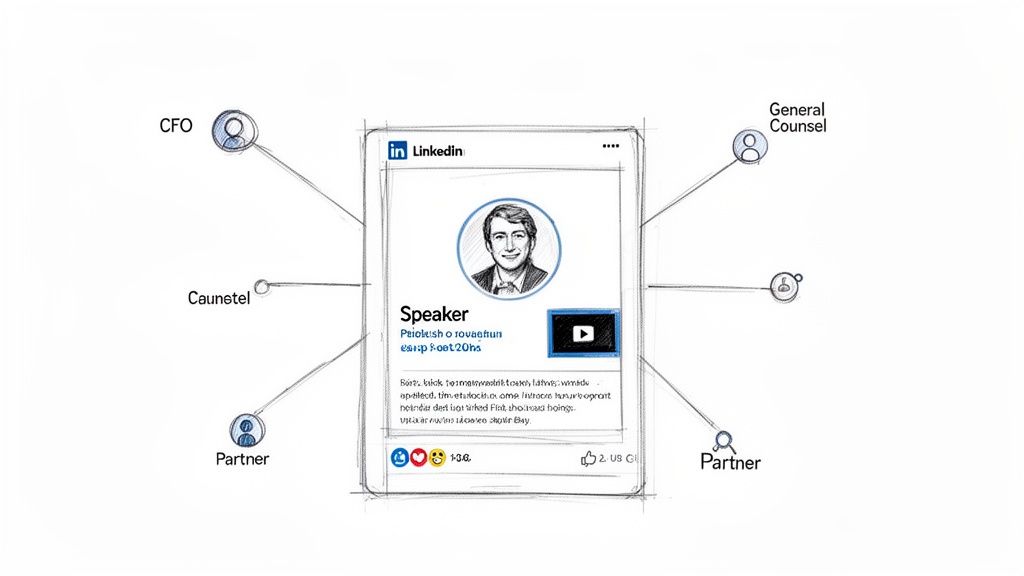
For B2B SaaS companies, LinkedIn is not just a social media platform; it is the premier digital forum for professional engagement and a cornerstone of effective webinar promotion strategies. This approach moves beyond simple company page announcements, focusing instead on positioning your experts as indispensable authorities in their field. The goal is to leverage the credibility of your product managers, executives, and subject matter experts to attract high-value attendees who frequent the platform for industry insights.
This strategy works by transforming your speakers from mere presenters into trusted thought leaders. Instead of just posting a registration link, your team actively shares valuable, pre-webinar content, such as short video snippets discussing a key industry challenge or a text post summarising a critical market trend the webinar will explore. By sharing directly from their personal profiles, your experts tap into their established networks, lending personal credibility to the event and achieving an organic reach that often surpasses company page followers by over 500%.
Why This Strategy Is Essential for ROI
In the B2B SaaS sector, trust and authority are paramount. Decision-makers are inundated with information and prioritise content from credible, recognised sources. A successful LinkedIn promotion builds this trust before the event, framing the webinar as a must-attend session led by a genuine expert rather than another sales pitch. Beyond platform-specific tactics, a comprehensive thought leadership strategy is vital for establishing authority and influence on platforms like LinkedIn. This method generates registrations and strengthens your brand reputation, directly impacting demand generation.
Actionable Implementation Steps
- Create Speaker-Centric Snippets: Edit 30-60 second video clips from past webinars or a pre-recorded session. Add custom thumbnails with the speaker’s headshot, name, and the webinar title. Video content on LinkedIn generates five times more engagement than other content types.
- Utilise Diverse Post Formats: Mix video content with text-based posts asking provocative questions related to the webinar topic. Use LinkedIn's native polls to gauge audience interest in specific sub-topics you plan to cover, driving engagement rates up by an average of 20-30%.
- Encourage Personal Profile Sharing: Your experts' personal networks are often more engaged than your company page followers. Provide them with pre-written copy and media assets to make sharing seamless.
- Engage with Industry Groups: Post the webinar details in relevant, niche LinkedIn Groups where your target audience congregates. For instance, a FinTech SaaS company could share a compliance webinar in a group for Chief Compliance Officers.
2. Email Segmentation & Multi-Touch Nurture Campaigns
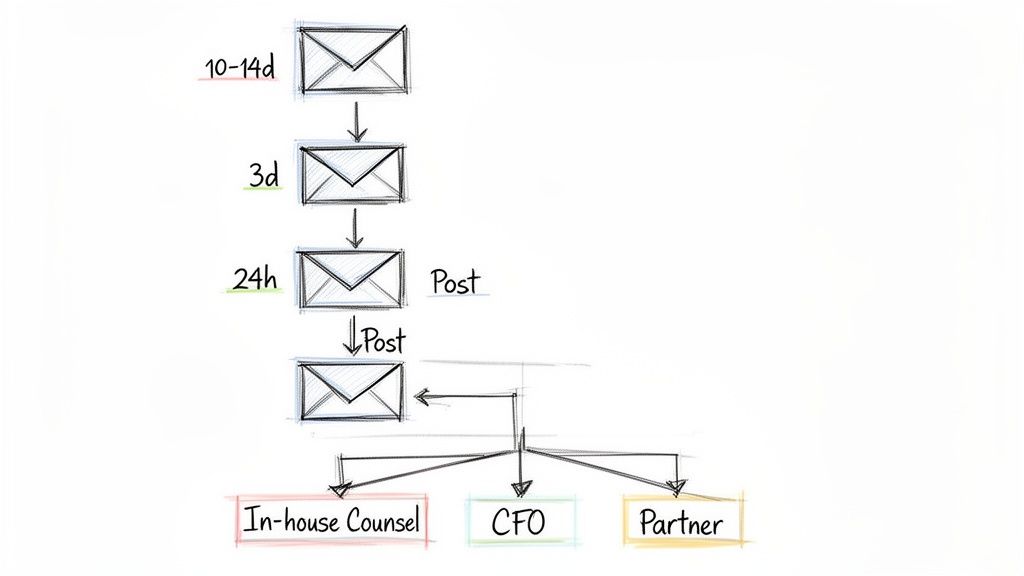
Blanket email blasts are inefficient and damage sender reputation; modern webinar promotion strategies rely on precision-targeted communication. This approach involves deploying sophisticated, multi-touch email sequences to different audience segments based on their role, industry, or past engagement history. Instead of a single "join us" message, this strategy nurtures potential attendees with a series of 5-7 carefully timed emails over a 2-3 week period, designed to build anticipation, convey value, and drive registrations.
The core principle is relevance. By segmenting your contact database, you can tailor your messaging to address the specific pain points of each group. For example, a SaaS firm promoting a webinar on AI-driven analytics would send a sequence focused on ROI and strategic implementation to VPs of Marketing, while a separate sequence for Data Analysts would emphasise technical features and integration protocols. This personalisation can increase email click-through rates by up to 41%, making the invitation feel like a bespoke opportunity rather than a mass-market advertisement.
Why This Strategy Is Essential for Efficiency
In the B2B SaaS landscape, your audience's time is their most valuable asset. Generic invitations are easily ignored. A segmented, multi-touch campaign demonstrates that you understand their specific challenges and have curated content directly for them. This method consistently outperforms single-send campaigns by nurturing interest over time, keeping the event top-of-mind, and providing multiple opportunities for conversion. It transforms your email marketing from a simple announcement tool into a powerful demand generation engine.
Actionable Implementation Steps
- Initiate Early with a Teaser: Send the first promotional email 10-14 days before the webinar. This email should introduce the core problem the webinar will solve, building intrigue without revealing all the details.
- Segment Your Audience Granularly: Divide your list by job title, industry, past webinar attendance, or even non-attendance to create highly targeted nurture tracks. A/B test subject lines for each segment to optimise open rates.
- Structure a Reminder Sequence: Schedule reminder emails to go out 3 days before, 24 hours before, and 1 hour before the event. Each reminder should highlight a different benefit, such as a key takeaway, a speaker’s credentials, or a sneak peek at a new feature.
- Develop Post-Event Nurture Tracks: Create two distinct follow-up sequences. One for attendees, providing the recording, slides, and a call-to-action for a demo. The second for registrants who did not attend, sharing the recording and encouraging them to sign up for a future session.
3. Strategic Paid Advertising (LinkedIn, Google Ads, Facebook/Instagram)
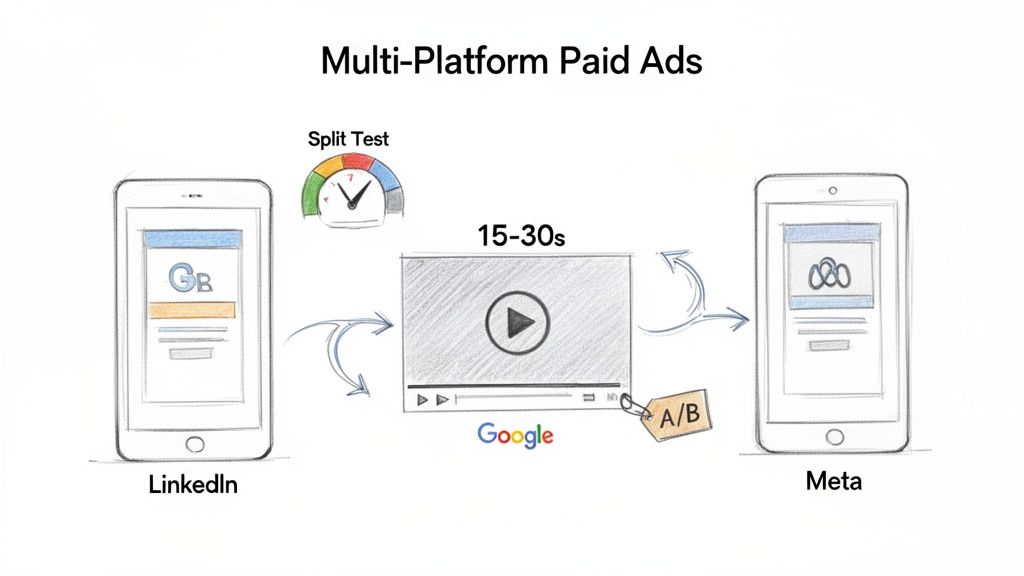
While organic outreach builds a foundational audience, strategic paid advertising is the accelerator that extends your webinar's reach far beyond existing networks. This approach involves deploying targeted digital ads across platforms like LinkedIn, Google, and even Meta to connect with ideal client profiles (ICPs) who have not yet engaged with your brand. Paid campaigns use precise targeting to ensure your message appears in front of the right professionals at the right time.
This strategy works by amplifying your message with a controlled budget, ensuring visibility in crowded digital spaces. For instance, a MarTech SaaS company can run LinkedIn ads targeting VPs of Marketing using keywords like 'customer data platform', or a cybersecurity firm can use Google Ads to capture search intent for 'data breach prevention'. This method is crucial for driving registrations within a compressed timeframe, moving beyond hope-based organic marketing to a results-driven, predictable demand generation model.
Why This Strategy Is Essential for Growth
In the competitive B2B SaaS landscape, relying solely on organic reach means missing a significant portion of your potential audience. Paid advertising provides the control and scalability needed to guarantee your webinar promotion reaches a critical mass of relevant professionals. It allows you to segment audiences with precision, running distinct campaigns for cold prospects, warm leads from your CRM, and past event attendees. By implementing robust conversion tracking, you can directly measure the cost-per-registration and ROI of your spend, a process made easier by analysing detailed webinar analytics.
Actionable Implementation Steps
- Allocate a Clear Budget: Dedicate 20-30% of your webinar marketing budget (e.g., $2,000 to $5,000) to paid channels. Start ads 2-3 weeks pre-webinar for an initial awareness push, then increase frequency and shift messaging in the final week.
- Segment Your Audiences: On LinkedIn, target cold prospects by job title and industry, retarget your website visitors on Google, and create lookalike audiences on Meta based on past registrant lists.
- Leverage Video Teasers: Use 15-30 second video clips from a pre-recorded session or a past webinar as your primary creative asset. Video ads consistently outperform static images for engagement on social platforms.
- A/B Test Ad Copy: Run split tests on your headlines and body copy. Test a benefit-driven headline (e.g., "Cut Your Churn Rate by 25%") against a FOMO-driven one (e.g., "Seats are Limited for Our Q4 Churn Forecast").
- Implement 'Last Chance' Retargeting: Two to three days before the event, run a dedicated retargeting campaign targeting individuals who clicked your ad but did not register, using urgent messaging like "Last chance to register".
4. Industry Association & Technology Partner Co-Marketing
Leveraging the established authority and reach of industry associations and non-competing technology partners is one of the most efficient webinar promotion strategies available. Instead of building an audience from scratch, this approach allows you to tap directly into a pre-vetted, highly engaged community of your ideal clients. These organisations, from software user groups to niche trade journals, have already earned the trust of the decision-makers you need to reach.
This strategy works by positioning your webinar as essential industry education, endorsed by a credible third party. A partnership can range from a simple sponsored email blast to a fully co-branded event, but the core principle is the same: you are borrowing the partner’s credibility to amplify your own. When a complementary SaaS company promotes your integration webinar to their user base, it provides an implicit recommendation that is far more persuasive than direct advertising.
Why This Strategy Is Essential for Lead Quality
In B2B SaaS, context and relevance are crucial. Decision-makers are inundated with content and prioritise information that is directly applicable to their tech stack and industry challenges. Partnering with a respected organisation places your webinar within that trusted context, framing it not as a sales pitch but as a valuable learning opportunity. This method dramatically shortens the path to registration for high-value attendees and can generate leads with a 30% higher conversion rate than those from cold outreach.
Actionable Implementation Steps
- Identify & Vet Potential Partners: Research and shortlist 3-5 key integration partners or industry publications whose audience profile precisely matches your target client. Analyse their engagement rates, audience demographics, and past event collaborations.
- Develop a Compelling Partnership Pitch: Approach potential partners at least 6-8 weeks before your webinar. Frame your proposal around the value you offer their audience, such as exclusive insights on using your products together or vital compliance updates.
- Negotiate Multi-Channel Promotion: Secure a promotion package that includes multiple touchpoints. Aim for inclusion in their member newsletter, a dedicated email send, website calendar listing, and posts on their social media channels.
- Provide a Turnkey Promotional Kit: Make it effortless for your partner to promote the event. Supply them with pre-written email copy, approved brand assets, social media graphics, and all necessary registration links and speaker details.
- Track Registration Sources: Use unique tracking links (UTMs) for each partner to accurately measure which collaborations are driving the most qualified registrants, allowing you to calculate ROI and refine future partnership decisions.
5. Content Repurposing & Gated Lead Capture Strategy
The value of a webinar should extend far beyond the live broadcast. A sophisticated content repurposing strategy transforms a single one-hour webinar into more than ten distinct marketing assets, creating a long-tail lead generation engine that captures high-intent prospects for months. This approach is a cornerstone of an efficient virtual event strategy, systematically deconstructing the recorded session into various formats, such as blog posts, social media clips, and downloadable guides.
This strategy works by atomising your core content. For instance, a SaaS company’s webinar on new data privacy regulations can be repurposed into a comprehensive whitepaper, an email mini-course, and a series of short, impactful video snippets for LinkedIn and X. By gating the high-value, long-form assets (like the full recording or whitepaper) behind a registration form, you continue to capture leads, while the shorter, ungated snippets act as promotional breadcrumbs that drive traffic and build brand awareness. This multiplier effect maximises the ROI on your initial content investment.
Why This Strategy Is Essential for Resource-Strapped Teams
For B2B SaaS content teams facing limited resources, a single piece of expert content is a valuable asset that can be leveraged to demonstrate authority repeatedly. Instead of constantly being on a content treadmill, repurposing allows your team to maintain a consistent output of high-quality material with minimal additional effort. This is one of the most efficient webinar promotion strategies because it ensures your expert insights reach the widest possible audience, reinforcing your company's thought leadership and fuelling your marketing pipeline long after the live event has concluded.
Actionable Implementation Steps
- Plan Repurposing Before Recording: Before the webinar, identify key talking points, statistics, and sections that can be easily extracted into standalone assets. This proactive planning simplifies post-production.
- Gate Premium Assets Strategically: Offer the full on-demand webinar recording, a detailed whitepaper, or a downloadable checklist as gated lead magnets. Use shorter clips and blog posts as ungated promotional content.
- Create a Multi-Format Content Calendar: Map out the release of each repurposed asset. For example: publish a summary blog post within one week, release social media video clips over the next two weeks, and launch a related email nurture sequence in week three.
- Extract Key Data Points and Quotes: Isolate 5-7 compelling statistics, quotes, or key takeaways from the webinar. Turn these into shareable graphics or text-based posts for social media to generate curiosity and drive traffic to your gated content. To dive deeper, explore this complete guide to repurposing content and maximise your marketing ROI.
6. Strategic Speaker & SME Amplification
Beyond your company's official channels, your speakers and subject matter experts (SMEs) represent one of the most powerful and authentic promotional assets you have. Strategic speaker amplification is a force multiplier, transforming your experts from presenters into active promoters who leverage their personal and professional networks. This approach involves equipping them with the tools and incentives to share the webinar, thereby extending your reach exponentially without additional marketing spend.
This strategy works by tapping into the inherent trust and credibility your product leads and executives have built within their own circles. A recommendation from a respected expert carries significantly more weight than a corporate social media post. By providing pre-prepared, easy-to-use promotional materials, you remove friction and empower your speakers to become influential advocates for the event, reaching niche audiences and senior decision-makers that standard marketing campaigns might miss.
Why This Strategy Is a High-Efficiency Tactic
In B2B SaaS, relationships and reputation are currency. When a Head of Product or senior engineer shares a webinar with their network, it acts as a personal endorsement. This method is crucial for cutting through the noise and attracting high-quality registrants who value the speaker’s expertise. It’s one of the most cost-effective webinar promotion strategies to boost both attendance and the perceived value of the event, reinforcing your firm's commitment to genuine thought leadership.
Actionable Implementation Steps
- Develop a Speaker Promotion Toolkit: Create a centralised resource hub (e.g., a shared Google Drive folder) with ready-to-use assets. Include 3-5 pre-written LinkedIn posts, email templates for client outreach, and custom-branded graphics featuring the speaker's headshot and key event details.
- Provide One-Click Sharing Links: Use URL shorteners like Bitly to create simple, trackable links for social sharing. This makes it effortless for speakers to post on their profiles and allows you to measure which speaker is driving the most registrations.
- Recruit and Plan Early: Onboard your speakers at least 4-6 weeks before the webinar. This provides ample time to co-ordinate a promotional schedule, gather their input, and ensure they are comfortable with the amplification plan.
- Establish a Communication Cadence: Send gentle reminders with fresh content suggestions at key intervals: two weeks before, one week before, three days before, and on the morning of the webinar to maximise visibility and drive last-minute sign-ups.
7. Strategic Webinar Series & Recurring Promotion Calendar
Moving beyond one-off events, a strategic webinar series transforms your educational content into a predictable, recurring touchpoint that your target audience anticipates. This approach involves creating a planned series, such as a 'Monthly Product Masterclass' or a 'Quarterly SaaS Trends' update, and synchronising its promotion across all channels. The goal is to build an appointment-viewing habit among your audience, reducing promotional friction and creating a reliable engine for demand generation.
This strategy works by establishing consistency and authority over time. Instead of marketing each webinar from a standing start, you are promoting an established brand and a continuous stream of value. An audience member who found one session valuable knows they can return next month for more, which simplifies the registration decision and fosters long-term engagement. This consistency also allows your marketing team to create efficient, repeatable promotional workflows.
Why This Strategy Boosts Content Output Efficiency
For SaaS content teams, a webinar series builds cumulative thought leadership and establishes a dominant voice on a specific subject. A single webinar demonstrates knowledge; a series demonstrates mastery and commitment. It turns your company into the go-to resource for a particular topic, attracting higher-quality leads who are actively seeking ongoing education. This method also improves forecasting, as you can track attendance patterns to predict lead flow and resource allocation more accurately.
Actionable Implementation Steps
- Develop a Series Brand: Create a unique name, logo, and visual identity for your series to ensure it is instantly recognisable in a crowded inbox or social feed.
- Plan an Annual Content Calendar: Map out your topics at least six to twelve months in advance to align with industry trends, product roadmaps, or client pain points. This foresight is crucial for building an effective webinar promotion timeline.
- Create Recurring Promotion Templates: Build standardised email sequences, social media posts, and ad creatives in your marketing automation platform. This not only saves significant time but also reinforces brand consistency.
- Promote Future Sessions During Current Webinars: Use the final few minutes of each webinar to announce the next topic and speaker, encouraging immediate registration while engagement is at its peak.
- Offer a Series Pass: For paid events, consider offering a bundle discount for registering for multiple sessions at once, which secures commitment and improves cash flow.
8. SEO-Optimised Landing Pages & Organic Search Capture
While most webinar promotion strategies focus on short-term channels like email and social media, an SEO-driven approach creates a sustainable, long-term lead generation asset. This strategy involves creating a dedicated, highly-optimised webinar landing page that targets specific, high-intent keywords your ideal clients are actively searching for. The objective is to capture organic search traffic not just in the weeks leading up to the event, but for months and even years after it concludes.
This method works by transforming your webinar registration page into a valuable, discoverable resource that answers a specific user query, such as 'best customer success platforms 2024' or 'how to reduce SaaS churn'. By focusing on long-tail keywords, on-page optimisation, and technical SEO, the page can rank highly in search engine results pages (SERPs). Unlike a paid ad that vanishes once the budget is spent, an optimised landing page continuously attracts qualified prospects, making it one of the most cost-effective webinar promotion strategies over time.
Why This Strategy Is Essential for Long-Term Demand Generation
For SaaS companies, prospects are often conducting deep research long before they are ready to engage. Capturing this high-intent traffic organically positions your company as the go-to authority on a particular subject. A SaaS firm with a landing page ranking for 'SOC 2 compliance automation' will consistently attract relevant IT managers. This approach builds a predictable pipeline of qualified leads and establishes a durable digital footprint that reinforces your firm's expertise, driving registrations for both live events and their on-demand recordings.
Actionable Implementation Steps
- Conduct Pre-Webinar Keyword Research: Six to eight weeks before the webinar, use tools like Ahrefs or SEMrush to identify 3-5 high-intent, long-tail keywords with achievable ranking difficulty.
- Build a Dedicated, Optimised Page: Create a unique landing page separate from your main site navigation. Ensure the primary keyword is in the H1 tag, URL, meta title, and meta description. The page must load in under three seconds.
- Structure Content for Search Engines: Use H2 and H3 subheadings to structure the page content around related sub-topics. Incorporate an FAQ section targeting common questions, and use Event schema markup to enhance your SERP listing.
- Convert to an Evergreen Resource: After the live event, replace the registration form with a form to access the on-demand recording. Update the content to reflect that the event has passed and continue to build internal links to it from relevant new blog posts.
9. Community Building & Exclusive Member Forums/Groups
Transforming webinars from isolated events into continuous conversations is a powerful webinar promotion strategy that builds lasting client relationships. This approach involves creating exclusive, managed communities, such as private LinkedIn Groups or dedicated Slack channels, where past and future attendees can connect, access bonus materials, and engage directly with your company's experts. The goal is to cultivate a loyal audience that views your brand as a central resource, not just a one-time presenter.
This strategy works by fostering a sense of belonging and providing ongoing value that extends far beyond a single 60-minute presentation. Instead of your promotional efforts ending when a webinar concludes, the community becomes a permanent hub for thought leadership. For instance, a SaaS company might create a Slack community for its power users, offering them early access to webinar registrations and exclusive Q&A sessions with product managers, thereby nurturing them from passive listeners into engaged advocates.
Why This Strategy Drives Retention and Advocacy
In the competitive B2B SaaS landscape, sustained engagement is key to reducing churn and building a robust pipeline. A one-off webinar attendee can easily forget your company amidst the noise. However, a member of an exclusive community is consistently exposed to your brand, expertise, and value proposition. This method creates a high-LTV (Lifetime Value) audience that is more likely to attend future events, refer colleagues, and ultimately convert into customers or upgrade their plans. It shifts the dynamic from transactional lead generation to relational business development.
Actionable Implementation Steps
- Establish a Community Charter: Before launching, create clear guidelines on the community's purpose, rules of engagement, and member benefits to set expectations.
- Launch with a Core Group: Start with a curated group of 50-100 of your most engaged customers or contacts to build initial momentum and a positive culture before expanding.
- Offer Exclusive Early Access: Announce new webinars to your community members 3-5 days before the public promotion begins, rewarding them for their loyalty with early registration.
- Extend the Conversation: Create dedicated discussion threads within the community related to the webinar topic both before and after the event to encourage deeper engagement and gather audience questions.
- Recruit Community Champions: Identify and empower your most active members to help facilitate discussions and welcome new participants, fostering a self-sustaining environment.
10. Strategic Media Outreach & Thought Leadership Publicity
Beyond direct promotion, one of the most powerful webinar promotion strategies involves securing earned media to validate your company’s expertise. This approach transforms your webinar from a company-hosted event into an industry-recognised source of insights. By pitching your speakers, data, and unique perspectives to journalists, podcasters, and media outlets, you generate powerful third-party credibility that paid or owned channels cannot replicate.
This strategy works by treating your webinar's core content as a newsworthy asset. A SaaS company’s research on upcoming industry benchmarks, for example, becomes a compelling story for a tech news outlet. A FinTech company’s webinar on AI in fraud detection can be pitched to specialised publications, resulting in a feature article that positions your speakers as go-to experts. This media coverage dramatically amplifies your message, driving registrations from highly relevant audiences who trust the outlets they follow.
Why This Strategy Builds Unmatched Credibility
In the B2B SaaS market, trust is the ultimate currency. Earned media coverage serves as an unbiased endorsement of your company’s intellectual capital. When an industry journalist quotes your CTO or a respected podcast features your expert, it signals to senior decision-makers that your insights are not just a sales pitch but valuable, vetted information. This external validation builds brand authority, generates high-quality inbound leads, and often leads to further opportunities like speaking engagements and new business inquiries.
Actionable Implementation Steps
- Develop a Targeted Media List: Six to eight weeks before the webinar, identify 10-15 journalists, podcasters, and publications that cover your specific niche and reach your target audience.
- Extract Newsworthy Angles: Pinpoint 2-3 compelling statistics, unique data points, or a controversial opinion from your webinar content. This forms the hook of your media pitch.
- Create a Media-Ready One-Pager: Prepare a concise document with key webinar takeaways, speaker biographies, headshots, and pre-approved quotes to make a journalist's job easier.
- Offer Exclusives and Embargoes: To attract top-tier media, offer them exclusive early access to your data or a pre-briefing with your speaker under an embargo until a specific date.
- Pitch Podcast Appearances: Identify relevant industry podcasts and pitch your speakers as expert guests 4-6 weeks pre-webinar to discuss the core topics, naturally promoting the upcoming event.
- Amplify Every Media Win: Once coverage is published, promote it aggressively across your company’s LinkedIn page, speaker profiles, and in follow-up email communications to registrants.
10-Point Webinar Promotion Comparison
| Strategy | Implementation complexity | Resource requirements | Expected outcomes | Ideal use cases | Key advantages |
|---|---|---|---|---|---|
| LinkedIn Strategic Outreach & Thought Leadership Positioning | Medium — consistent content calendar, profile management | Moderate — content creation, native video, optional paid ads, speaker time | High-quality B2B leads, increased credibility and engagement | B2B SaaS targeting specific decision-maker roles (IT, marketing, finance) | Direct access to key personas, strong native video performance, builds authority |
| Email Segmentation & Multi-Touch Nurture Campaigns | Medium–High — workflow setup, segmentation logic | Moderate — CRM integration, clean contact lists, copywriting, automation | High registration and attendance rates, measurable conversion metrics | Existing databases, targeted product updates, role-based outreach | Highest ROI on owned channels, precise personalization, measurable attribution |
| Strategic Paid Advertising (LinkedIn, Google, Meta) | Medium–High — media buying, tracking, optimization | High — ad budget, creative production, platform expertise | Immediate reach and accelerated registrations, scalable results | Short timelines, need to expand beyond organic audiences | Precise targeting, fast scale, strong retargeting performance |
| Industry Association & Technology Partner Co-Marketing | High — relationship development and negotiation | Moderate–High — partnership collateral, possible sponsorship fees, coordination time | Qualified, credibility-backed registrations and long-term visibility | Niche verticals, integration partner marketing, channel sales enablement | Pre-qualified audience access, endorsement credibility, lower CPL vs. cold outreach |
| Content Repurposing & Gated Lead Capture Strategy | High — cross-channel planning and asset production | High — transcription, professional editing, design, CMS integration | Extended lead generation over months, multiplies ROI per webinar | Long-term content programs, SEO-driven lead capture, thought leadership | Creates many assets from one event, high efficiency, ongoing lead capture |
| Strategic Speaker & SME Amplification | Low–Medium — provide toolkits and coordination | Low — speaker time, pre-written assets, simple tracking | Expanded organic reach, higher-conversion registrations via trusted voices | Companies with influential executives or client-facing SMEs | Low cost, authentic referrals, builds personal and company brands |
| Strategic Webinar Series & Recurring Promotion Calendar | High — long-term scheduling and consistent production | High — ongoing production resources, planning, recurring speakers | Predictable lead flow, higher repeat attendance, cumulative authority | SaaS companies seeking cadence (monthly/quarterly) and audience retention | Efficiency gains, improved forecasting, audience anticipation, brand consistency |
| SEO-Optimized Landing Pages & Organic Search Capture | Medium–High — keyword research and on-page optimization | Moderate — SEO expertise, copywriting, technical implementation | Sustainable, high-intent organic traffic and long-term leads | Evergreen topics with search demand, long-term acquisition plans | Low long-term CPL, compounding ROI, improved search authority |
| Community Building & Exclusive Member Forums/Groups | High — ongoing moderation and engagement strategy | High — community manager, platform, exclusive content | Higher attendance, loyalty, referrals, deeper audience relationships | SaaS with active user bases, customer success-driven engagement | Creates advocates, recurring engagement, direct product feedback loop |
| Strategic Media Outreach & Thought Leadership Publicity | High — PR pitching, media relationship management | Moderate–High — press kits, data visualizations, PR resources | Broad amplification, third-party credibility, valuable backlinks | Newsworthy topics, data-driven research, launching new product categories | Earned media credibility, wider reach than owned channels, SEO benefits |
From Promotion to Partnership: Executing a World-Class Virtual Event Strategy
The journey from a simple virtual event to a cornerstone of your company's demand generation engine is paved with strategic, deliberate action. As we have explored, mastering webinar promotion strategies is not about ticking boxes on a pre-flight checklist. It is about constructing an integrated, multi-channel system that captures attention, nurtures interest, and converts engagement into tangible business development opportunities. This is the difference between hosting a webinar and executing a world-class virtual event programme.
The strategies detailed in this article, from hyper-targeted LinkedIn outreach and segmented email nurturing to strategic paid advertising and powerful partnerships, form the pillars of this system. They represent a fundamental shift in thinking: a webinar is not a one-time broadcast, but the epicentre of a content ecosystem. By embracing this mindset, you transform a 60-minute presentation into a perpetual lead-generation asset that fuels your marketing pipeline for months. The true power lies in the synergy between these tactics, where SEO-optimised landing pages capture long-term organic interest, and a robust content repurposing engine ensures every insight reaches its maximum potential audience.
The Strategic Imperative: From Tactics to Transformation
For B2B SaaS marketing teams, the stakes are exceptionally high. Your audience of technical and business leaders is time-poor and information-rich. Gaining their attention requires more than just a clever subject line; it demands a demonstration of undeniable value and professional excellence at every touchpoint. This is where the execution of your virtual event strategy becomes a direct reflection of your brand's quality and expertise.
The most critical takeaways for your content team to implement are:
- Integration Over Isolation: Your promotional efforts must be interconnected. A LinkedIn ad should drive to an SEO-optimised landing page, which triggers a segmented email nurture sequence, which is then amplified by your speakers and partners. No single activity should exist in a vacuum.
- Perpetual Promotion: The promotional lifecycle does not end when the live webinar concludes. A sophisticated post-event strategy involving on-demand access, content repurposing, and targeted follow-ups is where a significant portion of your ROI is realised. This is crucial for capturing leads who couldn't attend live but represent over 40% of total webinar-generated leads.
- Data-Driven Optimisation: Consistently analyse your metrics. Which channels drove the most qualified registrants at the lowest cost-per-lead? Which email subject lines had the highest open rates? What was the attendee-to-MQL conversion rate? Use this data to refine and improve your webinar promotion strategies for every subsequent event, ensuring continuous improvement.
Ultimately, successful webinar marketing is a testament to strategic foresight and operational excellence. It is about understanding that the real value lies not just in the live event, but in the entire architecture you build around it. By committing to these advanced webinar promotion strategies, you move beyond simple lead capture. You begin to build a community, establish unshakeable thought leadership, and create a powerful, scalable engine for customer acquisition and growth.
Ready to transform your webinar programme from a series of tasks into a strategic, high-ROI asset? Cloud Present acts as your strategic partner, managing everything from broadcast-quality production to rapid multi-format content repurposing, allowing your experts to focus on delivering exceptional insights. Discover how Cloud Present can elevate your virtual event strategy and deliver measurable results.


