Webinar Automation Software: Transform Your B2B SaaS Content Strategy and ROI
Discover webinar automation software that streamlines production, boosts ROI, and scales demand gen for professional firms.
For B2B SaaS marketing professionals and content teams, the pressure is relentless. You're tasked with consistently creating high-value content that generates qualified leads, often with limited resources. It’s a significant challenge. This is where webinar automation software becomes a strategic asset, acting as a force multiplier to transform single live events into a scalable library of evergreen content. It handles the tedious, repetitive tasks like registration, follow-ups, and analytics, freeing your team to focus on what truly matters: strategy, professional-quality content, and measurable ROI.
From One-Off Events To Evergreen Content Engines
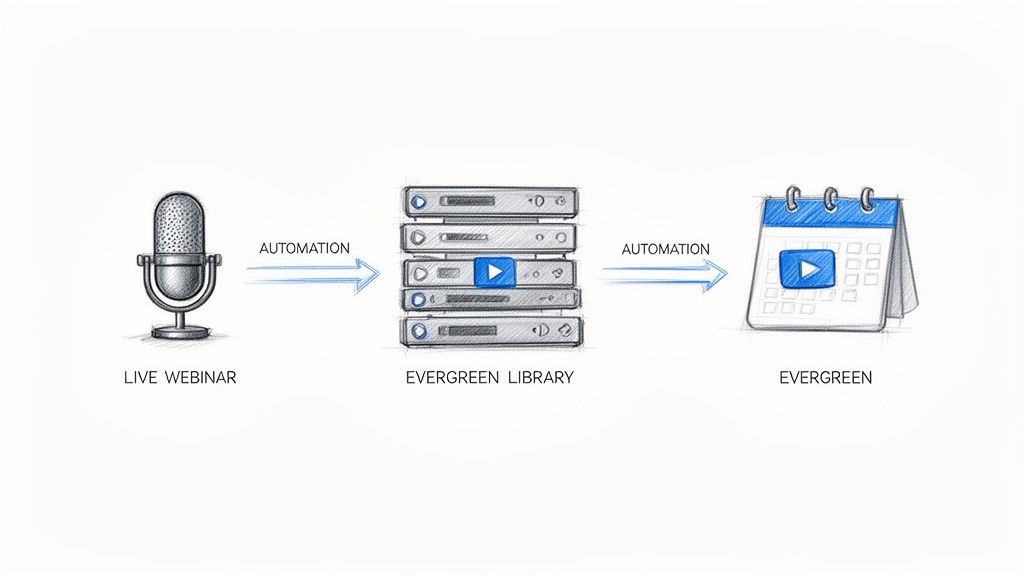
Too many SaaS marketing teams are trapped in a high-effort, low-return webinar cycle. Does this sound familiar? You pour weeks of intense preparation into a one-hour broadcast, experience a brief spike in engagement, and then… the valuable content effectively vanishes. This model is unsustainable and fails to maximise the significant investment of your team’s time and expertise.
The strategic shift is to view this software not merely as a hosting tool, but as a content production factory. It’s about moving away from the high-risk unpredictability of live events and towards a streamlined, reliable demand generation machine. The key is to focus on creating polished, pre-recorded assets from the outset, designed for longevity and repurposing.
Multiplying Your Content's Value and Proving ROI
Here’s where the efficiency gains become tangible: turning one primary asset—a 60-minute webinar—into a portfolio of derivative content pieces. This multiplies your impact without multiplying your workload, directly addressing the pain point of needing a consistent content output.
For instance, that single recording can be systematically repurposed into:
- A full on-demand video for evergreen lead generation. (Our guide on what is on-demand video dives deeper into this strategy.)
- Short, impactful social media clips (e.g., 60-second vertical videos for LinkedIn) to drive traffic and engagement.
- SEO-optimised blog posts built from the automated transcripts, capturing organic search traffic.
- Audiograms to share as mini-podcast episodes on social platforms.
This workflow is a direct response to a growing market need. The UK live online webinar software market recently hit US$5.05 billion, driven by this exact demand for scalable solutions that automate content repurposing. With projections showing a compound annual growth rate of 13.5%, it's clear the industry is making a major shift towards automation to improve efficiency.
To truly turn your webinars into evergreen assets, explore effective content repurposing strategies. Mastering this process allows your SaaS company to achieve the professional quality standards and significant ROI that leadership demands.
Core Features That Drive Efficiency And Quality
To understand the strategic value of webinar automation software, you must look beyond superficial feature lists. What matters are the tools that genuinely move the needle for B2B SaaS marketers by solving specific pain points around resource allocation and demand generation.
The right platform is packed with features designed to save your team hours of administrative work on every single event. It's about automating the repetitive tasks so you can focus on creating high-value content, all while maintaining the polished, professional image your brand is known for.
This isn't just a niche trend. The broader market for professional services automation (PSA) software in the UK reached US$496.3 million and is projected to soar to US$1.57 billion by 2033. This surge shows a clear strategic shift: companies are investing heavily in tools that sharpen operational efficiency and deliver measurable results.
Automating The Attendee Journey
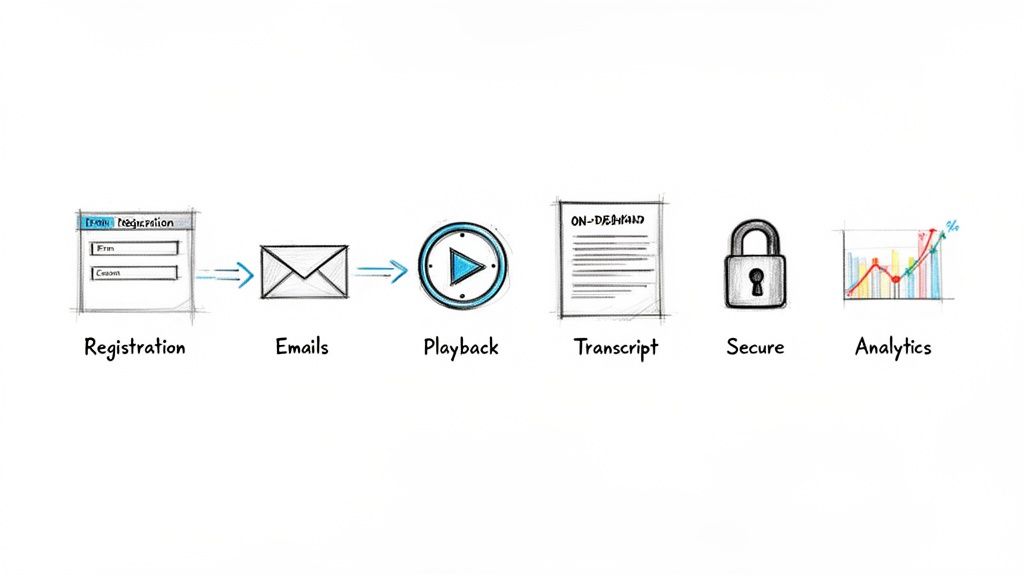
Effective webinar automation software acts as a meticulous event coordinator, managing the entire journey for each attendee. It starts the moment they register and continues until the final follow-up email lands in their inbox, ensuring no lead slips through the cracks. This is crucial for nurturing prospects through the funnel.
This is a fully coordinated system built to maximise engagement and conversions.
Implementation steps include:
- Automated Registration Workflows: Replace clunky sign-up processes. Implement customisable landing pages and forms that integrate directly with your CRM (e.g., HubSpot, Salesforce) to capture essential lead data seamlessly.
- Customisable Email Sequences: Nurture registrants with a pre-scheduled series of emails for confirmations, reminders with "add to calendar" links, and post-event resources. A simple sequence can boost show-up rates by over 15%.
- On-Demand Playback: Ensure your live session is automatically converted into a 24/7 evergreen asset. This lets you continue generating leads and providing value long after the live event concludes.
A well-crafted automated follow-up sequence can lift attendee show-up rates by up to 20% and increase post-webinar engagement (e.g., resource downloads) by 30%. It transforms a one-off event into a reliable, always-on demand generation machine.
Advanced Features For Enterprise And Regulated SaaS
For SaaS companies serving legal, financial, or other regulated industries, standard features are insufficient. Compliance, data security, and professional credentialing are not optional extras; they are critical requirements.
This is where understanding the complete infrastructure stack for enterprise webinar success becomes paramount. You need a platform built for the realities of your target market.
Look for tools that offer:
- Automated Transcription: For creating precise, time-stamped records that satisfy compliance requirements and dramatically accelerate content repurposing.
- Secure Access Controls: To protect sensitive data with features like password protection, single sign-on (SSO), and domain-based viewing restrictions.
- CLE/CPE Credit Tracking: Built-in features or integrations that automate the entire process of issuing and tracking mandatory professional education credits for your audience.
To maximise the ROI of your chosen platform, layering in proven marketing automation best practices will make your webinar programmes even more efficient. By prioritising software with these core and advanced capabilities, your team can finally trade administrative headaches for strategic impact.
Choosing Your Webinar Production Model
When scaling a webinar programme, marketing leaders face a critical decision: which production model is the right fit? The choice typically boils down to two paths: a Do-It-Yourself (DIY), software-only approach, or a fully managed studio model where you partner with an external team.
Each path has significant implications for your team’s time, content quality, and ultimate return on investment. Making the right choice is fundamental to building a content engine that drives sustainable growth.
A DIY path using only webinar automation software offers total control, but often hides substantial costs beyond the monthly subscription. You must factor in the steep learning curve for your team, the hours spent troubleshooting technical glitches, and the significant post-production workload required to turn a raw recording into a polished, professional asset.
The True Cost of a DIY Approach
For B2B SaaS companies, where brand reputation and professional quality are paramount, the DIY route can be a resource-draining gamble. The 'total cost of ownership' isn't just a financial figure; it’s measured in your team's valuable time—time that could be spent on strategy, promotion, and lead nurturing.
Consider the typical resource drain:
- Staff Training: Your team needs to become proficient not just with the webinar platform, but with video editing suites and audio mixing tools. This can consume weeks of valuable time.
- Technical Troubleshooting: Live events are notorious for technical failures. A dropped connection or a software crash can derail a presentation, damaging your brand's credibility.
- Post-Production Overload: This is a well-known bottleneck. For every hour of finished video, it takes an average of five to ten hours of editing to achieve a professional standard. This reality severely limits your content output capacity.
The Strategic Value of a Managed Partner
The alternative is to engage an outsourced, fully managed partner who acts as a true extension of your marketing department. This approach lifts the entire production burden from your team, placing it with a dedicated studio to guarantee broadcast-quality results without the internal operational headache.
With a managed service, your subject matter experts are freed to do what they do best: deliver valuable insights. A specialised team handles everything, from pre-production planning and recording to professional editing and repurposing that single recording into multiple assets.
This model directly addresses the core pain points for most SaaS marketing teams: limited internal resources and the constant need for a stream of high-calibre content.
By offloading the technical and creative production, your team can reclaim dozens of hours per event. That time is reallocated to high-value activities: promotion, lead nurturing, and strategic planning. To explore the pros and cons further, review our detailed comparison of in-house vs agency webinar production models. The right model doesn't just save time; it dramatically accelerates your time-to-market and multiplies your content ROI.
Building A Scalable Webinar Production Workflow
To move beyond inconsistent, one-off events, you need a repeatable process. A robust workflow is what transforms webinar production from a chaotic, last-minute scramble into a predictable system that delivers professional quality and consistency, every time.
This isn't about reinventing the wheel for each event. It's about establishing a production line that breaks the process into four clear phases: planning, production, promotion, and repurposing. With the right automation, you eliminate the manual work and free your team to focus on strategy and content—transforming a single idea into a multi-asset campaign that generates leads for months.
The Four Phases Of A High-ROI Workflow
A structured approach is your best defence against missed deadlines and wasted effort. Think of it as a roadmap guiding you from initial concept to long-term lead generation, ensuring every webinar delivers maximum value.
Here’s how to implement a scalable workflow:
- Strategic Planning: This is the foundation. Focus on solving a specific pain point for your ideal customer profile. The goal is to create a detailed production brief that defines the target audience, key learning outcomes, and a clear call-to-action.
- Quality-Focused Production: The objective is a flawless recording. Pre-recording sessions in a browser-based studio provides far more control and eliminates the technical risks of live events. This results in a polished, broadcast-quality asset that reflects your brand's high standards.
- Automated Promotion: Let your webinar automation software handle the heavy lifting. This means setting up automated email sequences for invitations and reminders, and using scheduling tools to maintain a consistent promotional cadence on social media without constant manual intervention.
- Systematic Repurposing: This is where you multiply your ROI. The final phase involves systematically deconstructing the core recording into a suite of smaller, easily consumable assets.
This infographic shows the difference in resource allocation between a DIY approach and a more streamlined, managed production model.
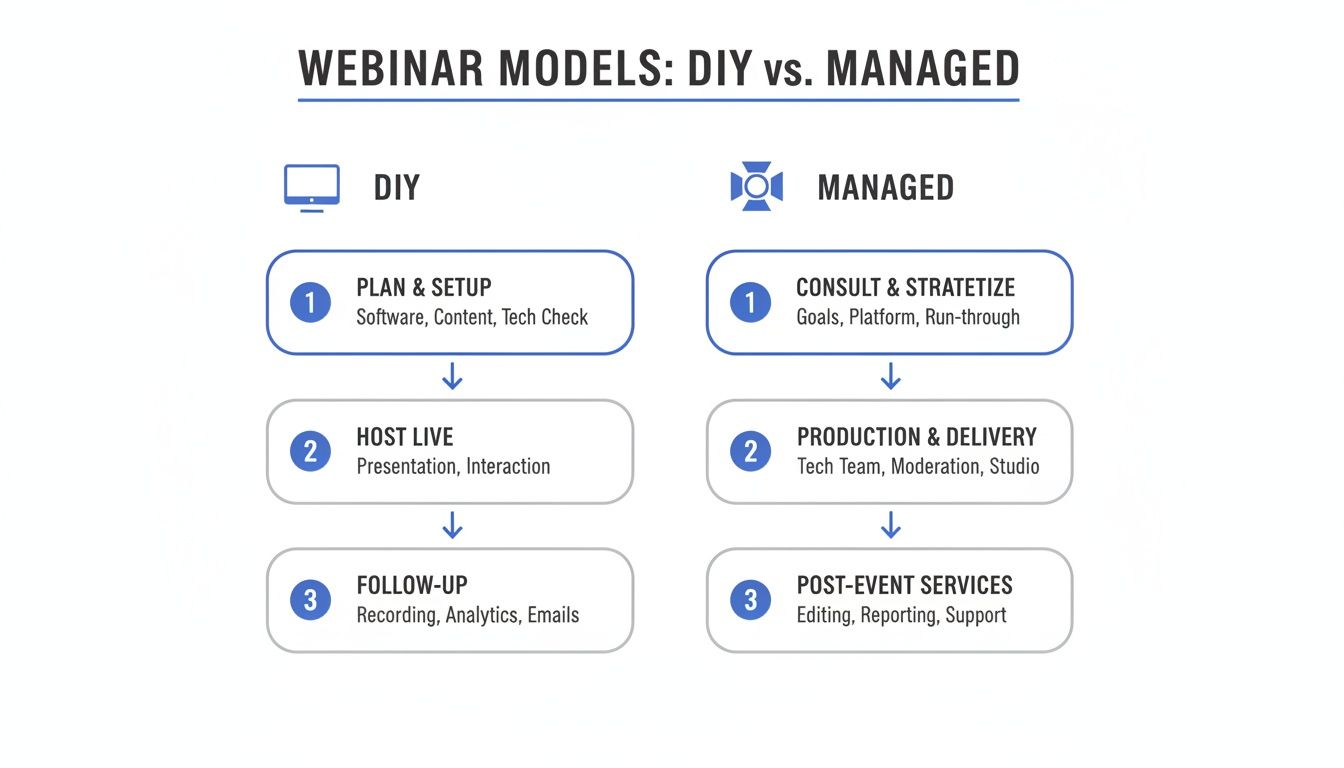
As you can see, a managed workflow front-loads the expertise, which massively reduces the post-production and distribution burden on your internal team.
From One Recording To Ten Assets
For any B2B SaaS marketing team with limited resources, the repurposing phase is critical for ROI. A smart content repurposing strategy ensures that the significant effort invested in one great webinar continues to deliver value for months, not just days.
By dedicating just a few hours to repurposing, your team can extend the lifespan of a single 60-minute webinar by over 500%. This is how you turn a one-time event into an evergreen demand generation asset that works for you 24/7.
It’s a straightforward process. For instance, a single hour-long recording can be quickly turned into:
- Two 3-minute deep-dive video clips for your blog and email newsletters.
- Five 60-second vertical video clips, perfect for grabbing attention on LinkedIn.
- An insightful blog post, created directly from the automated transcript.
- Several compelling audiograms to stop the scroll on social media feeds.
This systematic approach is the engine of scalable content marketing. By building a workflow that puts planning and repurposing at its core, you can finally break free from the high-stress, low-return cycle of one-off events and build a predictable system for generating high-quality leads.
With a managed service like Cloud Present, this entire workflow is built into our partnership. We act as your dedicated production team, turning your expertise into a library of powerful content assets that fuel your growth.
Measuring The Metrics That Actually Matter
To prove your webinar programme's ROI, you must look beyond vanity metrics. A high registration number looks great in a report, but it reveals nothing about business impact. To justify investment, you need to track KPIs directly tied to revenue and strategic business goals.
This requires focusing on three core areas: audience engagement, lead generation, and content utilisation. By measuring what happens after registration, you can paint a clear picture of how your webinar automation software is contributing to the bottom line, turning your content into a reliable engine for growth.
Engagement and Audience Insights
True engagement isn't about attendance rate. It’s about how long viewers stayed and what content held their attention. This is where audience retention graphs become your most valuable analytical tool.
Most professional webinar platforms provide these graphs, showing the exact moments when viewer attention drops off. A steep decline during a particular section is a clear signal that the content missed the mark. Conversely, a flat retention line indicates a highly engaged audience.
- Actionable Step: Analyse the retention graphs for your last three webinars. Identify the two sections with the highest retention and the two with the biggest drop-offs. Use this data-driven insight to structure your next webinar script, doubling down on what works and eliminating what doesn't.
Lead Generation and Pipeline Influence
Treat your on-demand webinars as 24/7 lead-generation assets. To measure their effectiveness, you must connect them directly to your sales pipeline by integrating your webinar platform with your CRM.
With this integration, you can track conversions from your on-demand library and, more importantly, measure its pipeline influence. When a lead who watched a webinar becomes a Marketing Qualified Lead (MQL) or Sales Qualified Lead (SQL), that interaction must be attributed correctly. This allows you to report on the metrics that stakeholders really care about: pipeline created and revenue influenced.
Tracking pipeline contribution is the only way to truly prove ROI. One B2B SaaS firm that connected its webinar platform to its CRM discovered that leads who engaged with on-demand content were 47% more likely to convert into sales-qualified opportunities.
Content Utilisation and Asset Velocity
An effective webinar programme extends long after the live session ends. The final piece of the measurement puzzle is tracking how effectively you repurpose the primary recording. A key metric for this is asset velocity.
Asset velocity measures how many derivative content pieces you create from a single webinar and tracks their collective performance across different channels.
For example, one 60-minute webinar can become:
- Two blog posts (from the transcript).
- Five short video clips for LinkedIn.
- Three audiograms for other social platforms.
By tracking the engagement, leads, and conversions each of these smaller assets generates, you can calculate the total ROI of the original webinar. This shifts the conversation from a simple "cost-per-webinar" to the total commercial value of the entire content campaign, making it far easier to demonstrate its strategic impact to leadership.
Your Webinar Automation Questions Answered
For B2B SaaS marketing professionals, adopting any new tool or strategy requires answering tough questions from stakeholders. Here are the most common ones we hear from marketing managers evaluating webinar automation software, with practical, data-driven answers to help you build your business case.
How Can Pre-Recorded Webinars Still Feel Engaging?
This is a critical question. The key to engagement in on-demand webinars isn’t a live chat box; it’s superior production quality and smart post-production.
Pre-recording allows you to add dynamic elements that are impossible live, such as on-screen graphics, animated text, and chapter markers that guide the viewer and maintain focus. A managed service integrates these edits into the production process, delivering a broadcast-quality experience that holds attention far better than a raw live recording.
You can also build interaction around the webinar. Use automated follow-up emails to ask specific questions or invite viewers to a separate, scheduled "Ask Me Anything" (AMA) session with the speaker. This creates valuable touchpoints without demanding simultaneous attendance.
What Are The Time Savings Of A Managed Service Vs. DIY?
The efficiency gain is a primary driver of ROI. A typical DIY webinar can easily consume 40-60 hours of your team's time. This includes setup, rehearsals, live management, editing, and repurposing, often involving multiple team members from marketing managers to subject matter experts.
A fully managed partner like Cloud Present can slash that time commitment to just 5-10 hours per event, focused purely on content preparation and final approval. That represents a 75-80% reduction in hands-on time for your team.
This efficiency boost means you can launch a complete, multi-asset campaign in the time it would have previously taken to produce a single raw recording. You get to market faster, and your experts can return to their core responsibilities.
How Does Automation Support Compliance For Regulated Industries?
For SaaS companies serving regulated sectors like finance or legal, automation is a critical tool for maintaining compliance and mitigating risk. Pre-recording is the first line of defence, allowing for a thorough internal review before public release. This simple step eliminates the risk of off-the-cuff, non-compliant remarks common in live events.
Beyond this, enterprise-grade webinar automation software includes key compliance features:
- Accurate Transcripts: Automate the generation of accurate, time-stamped transcripts, which are essential for mandatory record-keeping and audit trails.
- Secure Access: On-demand platforms provide robust access controls, ensuring sensitive information is only shared with the intended, verified audience through features like SSO.
- Credit Tracking: Many platforms integrate with systems to track and issue mandatory Continuing Legal Education (CLE) or Continuing Professional Education (CPE) credits, automating a complex administrative task.
Together, these features transform a potential compliance headache into a streamlined, secure, and auditable process.
Ready to reclaim your team's time and scale your content output? At Cloud Present, we act as your outsourced webinar studio, handling everything from production to repurposing so you can focus on strategy. Discover how we can transform your webinar programme today.


