A Modern B2B Demand Generation Strategy That Drives Growth
Discover a modern b2b demand generation strategy focused on webinars and smart content repurposing. Learn actionable tactics to boost ROI for your SaaS firm.
A modern B2B demand generation strategy isn't about just capturing leads; it’s about creating consistent, high-value engagement that positions your firm as a go-to authority. The real goal is to build a content engine that educates and nurtures potential clients long before they’re even thinking about buying. That way, when the time comes, you're their first call. This isn't about one-off campaigns, but a sustainable system for predictable growth.
Moving Beyond Outdated B2B Demand Generation

Let's be honest: the old B2B playbook is broken. For many B2B SaaS marketing professionals, the pressure to prove ROI is immense, yet resources are tighter than ever. We've all been stuck in that endless cycle of creating single-use content for isolated campaigns. It leads to burnout, diminishing returns, and fails to build any real brand equity or a predictable pipeline.
This guide unpacks a modern strategy that actually works, one that builds a sustainable content engine rather than relying on generic, short-lived tactics. To really get what’s changed, it helps to understand what is demand generation marketing at its core and how it’s different from just chasing leads. The focus has completely shifted from short-term wins to creating lasting authority.
We're going to walk through how to transform a single high-value activity, like a webinar, into a multi-channel campaign that consistently brings in high-quality engagement. Think of it as a practical framework for teams who need to maximise their impact without a bigger budget or team.
From Disjointed Tactics to a Cohesive Engine
The fundamental flaw with outdated demand gen is how fragmented it is. A blog post gets published here, a social media update goes out there, and a quarterly webinar happens in its own little bubble. Nothing connects. This disjointed approach lacks synergy and fails to build any momentum over time.
A modern strategy, however, revolves around a central "pillar" asset—often a high-production value webinar or virtual event—which is then systematically repurposed to fuel every other channel. This solves three of the biggest pain points for SaaS marketing teams:
- Consistent Content Output: A single webinar can be fractioned into dozens of smaller assets, feeding your content calendar for weeks. For example, a 60-minute webinar can yield 8-10 short video clips, 2 blog posts, and multiple social graphics.
- Resource Efficiency: It stretches the ROI on your subject matter experts' time, ensuring their insights reach the widest possible audience across multiple formats. This is critical when dealing with limited in-house resources.
- Improved Demand Quality: By consistently educating your audience, you attract prospects who are more informed, better aligned with your solution, and further along in their buying journey.
This isn't just theory. It's a practical framework for turning subject matter expertise into a powerful growth driver, tackling the core challenges of content creation, demand quality, and measurable impact head-on.
When you adopt this model, you build an always-on system that nurtures prospects at every stage. Imagine turning a single 45-minute expert session into a series of LinkedIn video clips, a detailed blog post, and a downloadable guide—all driving traffic back to the on-demand recording. That’s the kind of efficiency gains we’re talking about.
At Cloud Present, we partner with B2B teams to build these exact content engines, handling the entire webinar production and repurposing workflow from start to finish. We help you transform your firm's expertise into a machine that generates demand.
Laying the Strategic Groundwork for Success
Jumping into a B2B demand generation strategy without a solid foundation is like trying to build a house on sand. You'll burn through your budget and end up with very little to show for it. Before a single piece of content is created, you need to get crystal clear on who you're targeting and what a "win" actually looks like. This upfront work is what separates the campaigns that fizzle out from the ones that drive real revenue.
The first step is to move beyond those vague, fluffy buyer personas. What you really need is a razor-sharp Ideal Client Profile (ICP). This isn't just about a job title; it's a detailed blueprint of the perfect-fit company and the key people inside it who feel the pain you solve.
Define Your Ideal Client Profile
For a B2B SaaS firm, an ICP isn't just "mid-sized companies". A profile you can actually use gets much more granular.
Let's imagine a cybersecurity SaaS company. A powerful ICP might look something like this:
- Company Size: 250-1,000 employees.
- Industry: Financial Services or Insurance, specifically in the UK.
- Annual Revenue: US $50 million to US $500 million.
- Key Individual: The Compliance Officer or Head of Risk.
- Pain Points: They're struggling with manual reporting for new regulatory changes, facing potential fines, and lacking a single, reliable source for their compliance data.
This level of detail is a game-changer. It dictates everything—from the topics of your webinars to the specific messaging you use in your LinkedIn campaigns. You’re no longer shouting into the void; you're speaking directly to the very real, very urgent problems of a specific professional.
Map the Buyer's Journey
Once you know exactly who you're talking to, you need to map out their path to becoming a client. This journey is rarely a straight line. It has distinct stages, and your content needs to meet your prospects right where they are, mentally and emotionally.
Awareness Stage: The Compliance Officer finally admits their tangled mess of spreadsheets is unsustainable. They start searching for things like "regulatory reporting automation." Your job here is to show up with helpful, educational content—think blog posts or short, insightful videos that define the problem they're facing.
Consideration Stage: Now they know solutions exist and they're starting to weigh their options. This is the perfect moment to invite them to a detailed webinar that compares different approaches, or to share a case study showing how a firm just like theirs solved this exact problem.
Decision Stage: The prospect has narrowed it down to a shortlist, and you're on it. This is where you build confidence and seal the deal with a tailored strategy session, a detailed implementation plan, or powerful client testimonials.
To really nail this, you need more than just a few random content pieces. It requires a repeatable system. Understanding how to build a B2B content system for predictable leads is the key to creating an engine that guides prospects through each stage, predictably and effectively.
Set KPIs That Actually Matter
Let's be honest: vanity metrics like social media impressions and website traffic don't keep the lights on. Your b2b demand generation strategy has to be measured by its direct contribution to the bottom line. The C-suite wants to see a return on investment, which means focusing on KPIs that prove your marketing is making a tangible business impact.
The most successful strategies are measured with revenue-centric metrics. This shifts the conversation from "how many views did we get?" to "how much qualified pipeline did we generate?" and proves marketing's value to the business.
Recent research highlights a clear trend: specialists are 2.4 times more likely to achieve significant revenue growth than generalists. This reinforces the idea of focusing your efforts and, when necessary, bringing in outside experts for complex tasks like webinar production to guarantee professional quality and get better results.
This data-driven mindset means tracking the right numbers from day one. Below are the essentials, along with some realistic benchmarks to aim for.
Essential B2B Demand Generation KPIs and Benchmarks
This table outlines the key performance indicators (KPIs) that truly matter for a B2B SaaS demand generation strategy. The benchmarks provide a realistic starting point for what a well-executed campaign can achieve.
| KPI | Description | Example Benchmark (per US $10k spend) |
|---|---|---|
| Marketing Qualified Leads (MQLs) | Leads that fit your ICP and have shown real interest, like attending a full webinar or downloading a key resource. | 150-200 MQLs |
| Sales Accepted Leads (SALs) | MQLs that the sales team has reviewed and agreed are worth their time for direct follow-up. | 50-70 SALs |
| Pipeline Contribution | The total value of sales opportunities directly generated from your marketing campaigns. | US $150,000+ in new pipeline |
| Client Acquisition Cost (CAC) | The total marketing and sales cost required to land one new client. A healthy business keeps this in check. | Aim for a 3:1 ratio of Lifetime Value (LTV) to CAC |
Setting these benchmarks gives everyone a clear definition of what success looks like. It provides the framework you need to measure performance, justify your budget, and constantly fine-tune your strategy for predictable, sustainable growth.
Making Webinars the Core of Your Content Engine
It's time to stop treating webinars like one-off marketing events. For a truly effective B2B demand generation strategy, webinars need to become the powerful, pulsating core of your entire content engine. This shift from isolated events to a programmatic approach is what separates the firms that constantly scramble for content from those that consistently generate high-quality demand.
The key is building a recurring series of webinars planned around your clients' most pressing pain points. Think about a cybersecurity SaaS firm. Instead of one random webinar on "cyber threats," they could plan a quarterly series: one on new data privacy regulations, another on securing remote workforces, and a third on incident response planning. This creates a reliable source of value for your audience and, just as importantly, a predictable pipeline of content for your team.
From Expert Time to Scalable Assets
One of the biggest bottlenecks in any B2B SaaS firm is the limited time of your subject matter experts. They are your greatest asset, but their time is best spent delivering insights, not wrestling with production logistics. This is where a managed, pre-recorded virtual event strategy really shines.
By working with a production partner like Cloud Present, you offload the entire technical burden. We handle everything from browser-based recording to professional editing and branding. The process is remarkably efficient; a broadcast-quality, pre-recorded webinar can be turned around in just a few days.
This frees up your in-house experts to focus exclusively on what they do best: sharing valuable knowledge. The result is a higher-quality final product and a more sustainable process that respects everyone's time—solving a critical pain point for many scaling firms.
Achieving Broadcast Quality Production
In a crowded market, "good enough" simply doesn't cut it anymore. Professional quality isn't a luxury; it's essential for maintaining your brand's credibility and commanding attention. Achieving this standard doesn't require an in-house film crew, but it does demand a sharp focus on the details.
Here is a practical checklist for a broadcast-quality production:
- Crisp Audio: Use an external microphone. Clear, professional-grade audio is non-negotiable. Poor sound makes even the best content unwatchable, with 75% of viewers abandoning a video due to poor audio.
- Polished Visuals: This includes high-definition (1080p) video, custom-branded overlays, and smooth transitions between speakers and slides. Ensure good lighting.
- Seamless Editing: Implement an editing process to remove filler words, awkward pauses, and technical glitches. The final cut must be concise and engaging.
A polished, professional webinar signals to your audience that you value their time and are a credible authority in your field. It's a direct reflection of your firm's commitment to excellence and a key driver of ROI.
This level of quality is central to maximising ROI. A professionally produced webinar not only captures more leads during its initial run but also has a much longer shelf life as a valuable on-demand asset. When exploring ways to systematise this process, it's worth understanding the role of specialised tools. You can learn more about this in our guide on webinar automation software that can handle the heavy lifting.
Why Virtual Events Drive Unmatched ROI
Investing in a robust virtual event programme isn't just about creating content; it's a strategic investment in new business growth. Recent data completely validates this approach. Looking ahead to 2025, 51% of marketing professionals ranked webinars as a highly effective channel for engaging professional services firms in sectors like legal, finance, and consulting.
With B2B marketing budgets allocating 36% to new lead generation—significantly more than to brand building—the outsized ROI from a well-executed webinar strategy becomes crystal clear. You can dig into more insights about the latest B2B lead generation trends for 2025.
This effectiveness stems from the unique ability of virtual events to both educate and capture intent at scale. They provide a platform for deep-dive content that builds trust and demonstrates expertise in a way a simple blog post can't. This positions your firm not just as a service provider, but as an indispensable strategic partner. The demand is there; the opportunity is to meet it with quality, consistency, and a smart production strategy.
Amplifying Your Reach with Smart Content Repurposing
A great webinar is a huge investment of time and expertise. So why let it be a one-off event? If you’re not repurposing that content, you're leaving serious value on the table. The smartest B2B demand generation strategy is about working smarter, not harder. It’s about turning that single, polished webinar into a full month’s worth of high-impact marketing assets.
This isn't just about saving time; it's about turning your core content into a force multiplier. Instead of constantly hunting for new ideas, you can focus on extracting every last drop of value from the expert insights you've already captured. This approach solves the classic pain points of limited resources and the relentless pressure to publish, ensuring every effort delivers compound returns.
Think of it as a simple, repeatable engine: you plan, record, and then produce a whole library of content from that one session.
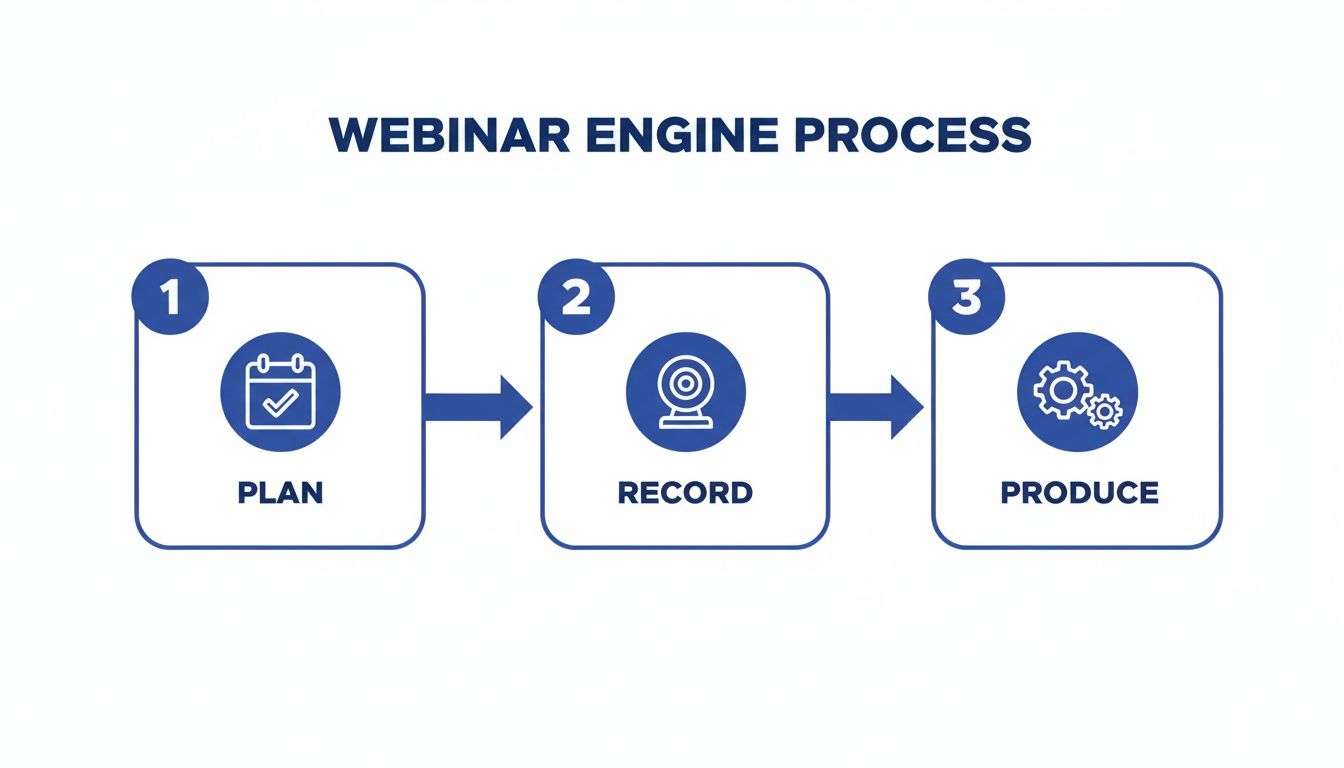
From the very beginning, your webinar is built to be a reusable asset, not just a fleeting live event.
The One-to-Many Content Blueprint
Let's get practical. Imagine you just hosted a 45-minute webinar on regulatory compliance for fintech firms. It was packed with insights, data, and expert commentary. Instead of just emailing out the recording link, let's break it down into a strategic campaign that fuels multiple channels for weeks.
The first move? Get a full, accurate transcript. This becomes the raw material for your entire repurposing engine. From here, you can spin out a diverse library of assets, each tailored to different platforms and how your audience likes to consume content.
This is about more than just reusing what you have; it’s about reformatting it to meet your audience where they are. For a deep dive into the nuts and bolts of this process, check out our complete guide to repurposing content and see how you can maximise your marketing ROI.
Your Post-Webinar Repurposing Checklist
To make this process easy to delegate and scale, here’s a concrete blueprint for turning that single webinar into a powerful, multi-channel campaign. This framework guarantees you extract every bit of value from your initial investment.
Week 1: Laying the Foundation
- SEO-Optimised Blog Post: Use the transcript to write a detailed, 1,500-word article covering the webinar's core themes. Make sure to embed key video clips and the full on-demand recording.
- LinkedIn Article: Publish a punchy, 600-word version of the blog post as a native LinkedIn article. Post it from your key speaker’s profile to really build their thought leadership.
- Email Nurture Sequence: Create a three-part email series for attendees and registrants. Share key takeaways and link back to the on-demand recording and the new blog post.
Week 2-3: Going Visual with Video and Graphics
- Short-Form Video Clips (4-6 clips): Edit the most impactful moments—a surprising stat, a key insight, or a powerful quote—into snappy 30-60 second clips. Add branded captions and push them out on LinkedIn. They’re perfect for grabbing attention in a crowded feed.
- A Compelling Infographic: Pull out the most important data points and stats. Work with a designer to create a visually engaging infographic that simplifies complex information and is highly shareable.
- Quote Graphics (3-5 graphics): Design simple, professional graphics featuring powerful quotes from your speakers. These are fantastic for reinforcing key messages on social media.
By the end of this process, a single 45-minute recording has been transformed into over a dozen distinct pieces of content. This not only extends the lifespan of your original effort but also increases your total reach by 300% or more across various channels.
Week 4: Audio and Long-Term Assets
- Podcast Episode: Strip the audio from the webinar recording, add a professional intro and outro, and release it as a podcast episode. This is a great way to reach people who prefer to consume content on the go.
- Internal Sales Enablement: Create a one-page summary of the webinar's key talking points and Q&A insights. This arms your business development team with fresh, relevant material for their client conversations.
This systematic approach transforms your webinar programme from a series of isolated events into a sustainable, always-on content engine. And by partnering with a service like Cloud Present, you can streamline this entire workflow. We handle the professional production and repurposing, letting your team focus on strategy and engagement—making sure your B2B demand generation strategy is both efficient and incredibly effective.
Activating Your Content Across the Right Channels
Creating an incredible library of repurposed assets is a huge accomplishment, but it's only half the battle. The most brilliant content is useless if it never reaches the right people. Strategic distribution is what turns that potential into pipeline, and for B2B SaaS firms, the channel mix has to be deliberate, targeted, and measurable.
With your collection of webinar clips, infographics, and articles ready to go, the focus shifts to activation. This isn't about blasting content everywhere and hoping something sticks; it's about precision. The goal is to place the right asset in front of the right person at the exact moment it will have the most impact.
Leveraging LinkedIn for Precision Engagement
For anyone in B2B SaaS, LinkedIn is the main arena for professional engagement. It's where both organic reach and highly targeted Account-Based Marketing (ABM) plays come to life. The content you've repurposed from your webinar is the perfect fuel for both.
Imagine you've identified a list of 50 high-value target accounts. Instead of a generic outreach message, your sales team can now lead with real value.
Here's a practical implementation step: Share a 60-second video clip from your webinar where an expert provides a critical insight. A sales development representative can share this directly with a key stakeholder in a target account with a simple message:
"Saw your team is focused on [Pain Point], and this insight from our recent session on the topic seemed relevant."
This simple tweak completely changes the dynamic from a cold pitch to a helpful consultation.
Driving Leads with Gated Assets and Nurture Sequences
While some content should be free to build brand awareness, gated assets are crucial for capturing intent and generating marketing-qualified leads (MQLs). Your full, on-demand webinar recording is the ultimate high-value lead magnet.
Here’s a practical implementation plan to put it to work:
- Create a Dedicated Landing Page: Build a professional, compelling landing page for the on-demand webinar. Use key quotes and data points from the session to highlight the value. Aim for a landing page conversion rate of at least 20%.
- Promote Across Channels: Use your short video clips and infographics on LinkedIn and in email newsletters to drive traffic directly to this landing page. The call-to-action is simple: "Watch the full session now."
- Implement an Email Nurture Sequence: Once someone registers, they enter an automated email sequence. This isn't a sales pitch. It's a continuation of the educational journey, sharing the blog post you wrote, the infographic you designed, and case studies related to the webinar topic.
This structured process ensures that every lead is methodically nurtured, building trust and keeping your firm top-of-mind.
The real efficiency gain comes from creating a seamless handoff between marketing and sales. When a lead engages with multiple pieces of repurposed content, like watching the webinar and downloading a related guide, they are signalling strong intent. This is the trigger for a well-informed, value-led sales conversation.
Creating a Seamless Sales Handoff
A breakdown between marketing and sales is where so many demand generation strategies fall apart. The leads you generate must translate into meaningful sales conversations, or the entire effort is wasted.
To prevent this, establish a clear Service Level Agreement (SLA) that defines exactly what constitutes a sales-accepted lead (SAL). For instance, a lead who attends the live webinar and later downloads a case study from the nurture sequence could be flagged for immediate follow-up.
You also need to equip your sales team with the context they need. Give them a summary of the webinar's key themes and access to all the repurposed assets. This allows them to continue the conversation seamlessly, referencing the content the prospect has already consumed.
This data-driven approach ensures that by the time your sales team reaches out, the prospect is already warmed up, educated, and primed for a productive discussion. With a strategic partner like Cloud Present managing the production and repurposing, your team can focus entirely on these high-value activation and engagement activities.
Measuring Performance and Optimising for Growth
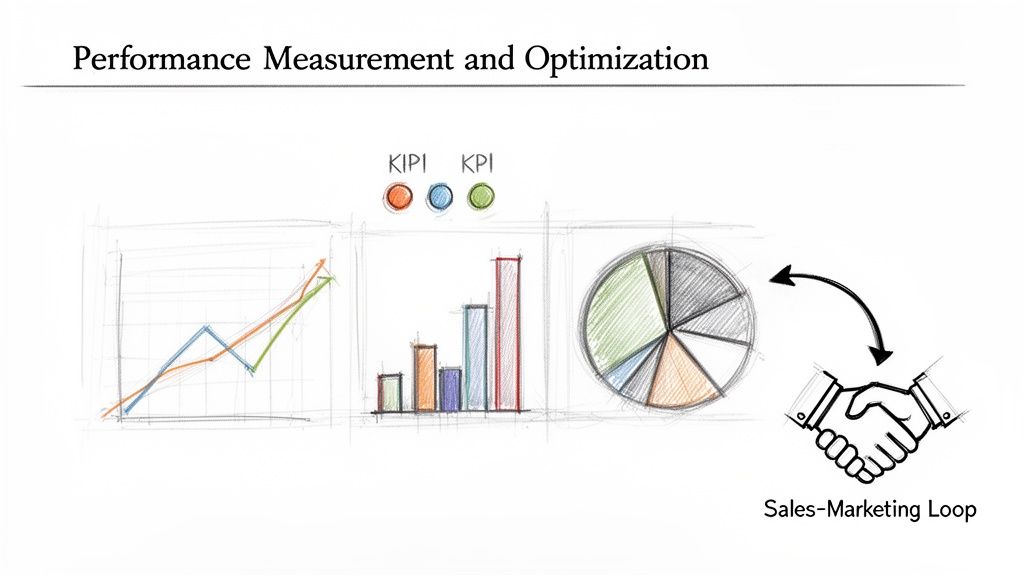
Creating a steady stream of high-quality content is a huge win, but a truly successful B2B demand generation strategy doesn't stop there. You have to close the loop, connecting every single activity directly back to business outcomes. This is the moment you shift from just running campaigns to steering a data-driven growth engine.
By constantly checking performance against the KPIs you set earlier, you build a rock-solid business case for your work and secure the investment needed to keep going. This isn’t about pulling a report at the end of the quarter; it’s about continuous, real-time analysis and tweaking. The goal is to figure out exactly what resonates with your audience and drives the most valuable engagement, so you can put your limited resources where they’ll make the biggest splash.
From Data Points to Strategic Insights
Good measurement goes way beyond just tracking MQLs. You need to dig into the analytics to understand the why behind the numbers. For a strategy built around webinars, this means dissecting performance at every stage of the funnel to spot patterns and find opportunities.
Start by asking some pointed questions about your virtual event performance:
- Topic Resonance: Which webinar titles had the best registration-to-attendee conversion rate? A session on "Advanced AI in Fintech Compliance" might pull a 45% attendance rate, while a broader "Intro to Fintech" only gets 25%. That's a clear signal your audience craves specialised content.
- Channel Effectiveness: Where are your best leads actually coming from? You might find that organic LinkedIn posts drive a high volume of registrants, but the leads from a targeted email nurture sequence convert to sales-accepted leads (SALs) at double the rate.
- Asset Engagement: Which of your repurposed assets are generating the most meaningful engagement? Maybe those short video clips on LinkedIn get thousands of views, but it’s the in-depth blog post that's generating leads with a 20% higher lead-to-opportunity conversion rate.
Your analytics dashboard isn't just a reporting tool; it's a strategic guide. It tells you which content pillars to double down on, which channels deliver the highest-quality audience, and where your budget will generate the best possible return.
For a more granular look at this process, it helps to know which metrics really matter. Our guide on how to measure webinar ROI breaks down a framework that can help you prove marketing's tangible impact.
The Sales Feedback Loop
Data tells you one part of the story, but the most valuable insights often come straight from the front line. Setting up a structured feedback loop with your sales or business development team is non-negotiable for long-term success. It turns demand generation from a siloed marketing function into a collaborative, revenue-driving effort.
Try implementing a regular, bi-weekly meeting between marketing and sales leads. Keep the agenda simple but focused: review the quality of recent MQLs and SALs. The sales team can provide direct feedback, like, "The leads from the last webinar were great, but many were from companies outside our core ICP of 250-1,000 employees."
This kind of qualitative insight is gold. It lets you immediately refine your targeting, adjust your messaging, and continuously improve the quality of leads you deliver. This ensures your engine is always becoming more efficient and more effective.
Your B2B Demand Generation Questions Answered
Building a modern B2B demand generation strategy can feel a bit overwhelming, but when you break it down, a clear path starts to emerge. Let's tackle some of the most common questions B2B marketers have when they're ready to build a content engine around webinars and smart repurposing.
How Much Budget Should I Actually Allocate to Webinars?
There's no single magic number here, but a solid starting point is to set aside 15-25% of your total demand generation budget for your webinar programme. This covers both production and promotion. A typical broadcast-quality webinar, especially when you work with a partner like Cloud Present, might land somewhere between US $3,000 to US $7,000.
Now, that might sound like a lot for one event, but you're not just paying for a one-hour session. That investment covers professional recording, sharp editing, and the creation of a whole suite of repurposed assets. When a single webinar can generate US $150,000+ in pipeline, the ROI suddenly looks incredibly attractive.
The key is to stop thinking of it as a one-off event cost. View it as an investment in a library of long-term marketing assets that will keep working for you long after the live event is over.
What Team Structure Do I Need to Run This Strategy?
You don't need a massive team, but you absolutely need the right roles in place. A lean but highly effective setup usually includes three key players:
- A Content Strategist: This person is the brains of the operation. They own the webinar calendar, dig into your ICP's pain points to find killer topics, and coordinate with all the subject matter experts.
- A Demand Generation Manager: They're responsible for getting eyeballs on the content. They handle the promotion, distribution, and performance tracking to make sure every asset reaches the right audience at the right time.
- Subject Matter Experts (SMEs): These are your internal thought leaders—the engineers, product managers, or directors who hold all the knowledge. Their only job should be to show up and share what they know. Everything else is handled for them.
The biggest efficiency gain comes from outsourcing the technical production and the nitty-gritty of repurposing. This frees up your small, strategic team to focus on high-value tasks like content planning and audience engagement, instead of getting bogged down in video editing software.
How Can I Justify This to My Leadership?
Simple: talk about business outcomes, not marketing metrics. Your leadership team doesn't care about views and clicks; they care about revenue.
Present a clear model that draws a straight line from your webinar engine to the bottom line. Show them how a consistent, programmatic approach to virtual events directly supports major business goals by generating high-quality MQLs and contributing a predictable amount to the sales pipeline every single quarter.
Frame the investment as what it is: a scalable system for turning your firm's internal expertise into a powerful and predictable client acquisition channel. A data-driven business case like that is what gets executive buy-in every time.
A modern B2B demand generation strategy shouldn't be a constant, draining scramble for new content. With the right approach and the right partner, you can build a sustainable engine that turns your firm's expertise into a predictable source of high-quality demand.
At Cloud Present, we act as your outsourced production studio, handling everything from broadcast-quality production to strategic content repurposing. We make it easy for B2B SaaS firms to unlock the value hidden inside their teams.
Discover how we help B2B firms like yours build a powerful, efficient content engine.


